

Spotlight on Ireland’s ‘affinity’ diaspora in China
Ireland and China’s long-standing relationship is strongly supported by the vibrant people-to-people and cultural connections. While a modest population of just over 2,500 Irish people live across China, there are over 26,000 people who identify as Chinese living in Ireland today.
Many Chinese people come to Ireland for work and study, and have continued links with their families back home. Many others return home to China and we hope they bring with them fond memories of their time in Ireland, maintaining lasting connections between our two nations.
Here we want to share with you the stories of some of Ireland’s affinity diaspora in China, those who have moved back to China, or intend to, but through language, music and literature, keep Ireland and Irish culture in their hearts at home.
Jaylin Chu: Traditional Irish Musician playing in Beijing
Jaylin Chu is a traditional Irish musician who plays the flute in a band called Canu.
“My first encounter with Irish traditional music was watching Riverdance when I was at high school, after which I became an avid enthusiast! I began trying to imitate Irish music with some instruments such as the Chinese Dizi, saxophone and the classical flute. I started collecting a lot of Irish music albums and related information. I decided to learn playing a real Irish instrument so I bought my first tin whistle from an online store, then taught myself by learning slow tunes, using albums and concert videos.
Then there were performance opportunities. The most memorable one was on in June 2010, when I played tunes for then President of Ireland, Mary McAleese, who was visiting China. At that time, I had just mastered the skills of playing traditional dance tunes. I could only play a few fast tunes and I was very nervous, but I completed the performance smoothly. President McAleese was very surprised and happy to hear such traditional Irish music in China, and praised my performance.
In September of the same year, I met one of my favourite musicians, Joanie Madden. She had a concert in Beijing, and I was so lucky to get the chance to play a tune with her on stage. She gave me a lot of encouragement and suggestions for my performance. When bands such as the Chieftains and Altan visited Beijing, I also had the chance to play with them. All this experience strengthened my confidence to continue on the Irish music road.
In 2014, I began to teach tin whistle classes in Beijing. I might be the first tin whistle teacher in mainland China! Over time, more and more Chinese people began to like the music and learned how to play the tin whistle. The students were from all over China and of different ages so this was a precious and rewarding experience for me. Since more people have begun to play Irish music here, I organised Irish sessions to provide a place for traditional musicians living or travelling in Beijing to play Irish music.
In 2019, I took the most important step in my music career and applied to the Irish Traditional Music Performance master’s programme at the University of Limerick, receiving a full scholarship from the Irish government. I took classes, performed in exams, rehearsals, public gigs, sang in the church choir, and played at sessions with friends. Every experience was unforgettable and enriched my musical world.
I have a band now called Canú and we often collaborate with Embassy of Ireland in Beijing, performing at cultural events. I have more plans for the future to incorporate modern music elements into Irish traditional music and introduce more people to this culture. It's not easy, but I'm up for the challenge!”
Junhan Zhang: Lecturer in the Irish Studies Centre and the Beijing Foreign Studies University
Junhan Shang teaches Irish language courses in the Irish Studies Centre in Beijing Foreign Studies University (BFSU).
“In 2018, having completed my bachelor’s degree, I embarked on a transformative journey to Ireland to immerse myself in the Irish language and Irish Studies. The faculty at the School of Irish, Celtic Studies and Folklore at UCD greeted me with unparalleled warmth and support. These two years deeply ingrained in me an affinity for Irish culture and language, inspiring me to become a passionate advocate for Ireland.
The Irish Studies Centre in Beijing Foreign Studies University (BFSU), where I now teach, serves as a conduit for promoting Irish literature, politics, culture, language and history from a Chinese perspective. Leveraging this platform, I teach Irish language courses, infusing each session with cultural insights, and organise events on days like St. Patrick’s Day and Bloomsday. I continually refine my teaching approach, guided by student feedback. The students’ passion towards Irish language and Ireland was clearly expressed when they applied to recite When You Are Old in Irish with the Tánaiste Micheál Martin during his visit to Beijing in November 2023.
Beyond the classroom, I also led a group of students on a research trip to Ireland, enabling them to experience its rich heritage first-hand. This excursion also rekindled academic collaborations with scholars in institutions like TCD, UCD, and UCC, bridging connections that were disrupted by the pandemic.
As our cultures increasingly intertwine, a growing number of Chinese individuals are discovering the depth of Ireland’s history, culture, literature, and arts. No longer a distant, abstract concept, Ireland presents itself with clarity and substance. We ponder how a small nation can wield such profound influence and find resonances that connect our cultures.
These parallels and distinctions drive our dialogue and mutual understanding. It is my honour to act as a cultural bridge, fostering appreciation for Irish culture in China while sharing Chinese narratives with Ireland.”

Fang Zhang: Irish language and Irish history teacher in the Beijing Foreign Studies University
Fang Zhang is also a teacher in BFSU, teaching Irish language and Irish History and hoping to develop more Irish studies modules.
“Before coming to Beijing Foreign Studies University (BFSU) as an MA student, what I used to know about Ireland was only “The Troubles” in Northern Ireland and that the Irish language belongs to Celtic languages of the Indo-European family; apart from that, I hardly knew anything else.
That changed when I started my MA studies in 2010 in BFSU – although I was doing British Studies, I had my first experience meeting Irish people at the Embassy of Ireland in Beijing together with students of MA Irish Studies in 2011. Then I became friends with Irish professors visiting BFSU. I have learned a lot from them, although I did not decide to learn the Irish language until 2016 – the centenary of the Easter Uprising – when I was convinced by a friend of mine to learn it.
I never thought that I would have a chance to learn the language and Irish studies in Ireland, until 2018 when my colleague Junhan and I studied there for two years. We came back to BFSU in 2020 and started to teach the Irish language to students from BFSU and other universities in Beijing. The first Chinese textbooks of the Irish language we wrote have been published and we plan to continue with this huge project. In November 2023, Tánaiste Micheál Martin visited BFSU (for the second time!) with a great welcome from those of us at the Irish Studies Centre. He was amazed by our contributions to Irish language teaching and research in Irish Studies. That was a top moment in our life.
Now I am teaching the Irish language and Irish history to students in BFSU, and hopefully more modules on Irish Studies will be added. The Irish Studies Centre at BFSU is the earliest (established in 2007) and probably the best Irish Studies Centre in China. We hope to increase the scope of Irish Studies in China: in addition to Irish literature in English and Irish politics and foreign policy, we want to expand research on Irish language, Irish history, Irish folklore, and Celtic Studies in future. As we celebrate the 45th anniversary of Chinese-Irish diplomatic relations in 2024, let’s look forward to the further consolidation of the friendship between our two countries, and to the further development of the Irish studies in China.”
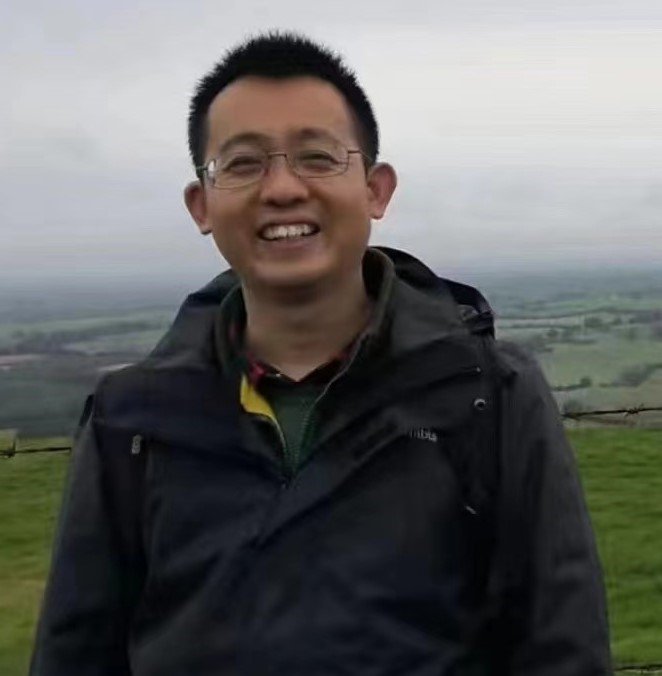
Guiyu Lin: Student of Irish Writing in Dublin, Ireland
Guiyu Lin is the recipient of the Government of Ireland Bilateral Scholarship M.Phil. Student in Irish Writing, Trinity College Dublin, and MA student in Irish Studies, BFSU.
“I began my MA in Irish Studies at Beijing Foreign Studies University (BFSU) in 2021. Through diverse courses in politics, culture, Gaeilge, history, and literature, I gained a comprehensive understanding of Ireland. I was particularly captivated by its lyrical language, intriguing folklore, and vibrant literary world, which fuelled my dream to study Irish literature and live on this picturesque green island.
With the generous funding from the Government of Ireland and the Chinese Scholarship Council (CSC) (2023-2024), I fulfilled my dream by continuing my studies in Irish Writing at Trinity College Dublin as a partnership student from BFSU.
My life in Dublin has been idyllic. I had the privilege of living with an Irish landlady Sheila who, along with her warm and humorous family, made me feel at home. She drove me through the streets, mountains, and rivers of Dublin, Kerry, and Meath, passionately sharing the stories and histories of these places. The landscapes, people, and culture became vivid in my mind, deepening my attachment to this lovely land.
I also made many wonderful friends, including those from diverse backgrounds, through my unforgettable volunteering experience at Sweny’s Pharmacy. Nestled on bustling Lincoln Street and famous for its appearance in James Joyce’s Ulysses, Sweny’s is maintained by dedicated volunteers enthusiastic about Joyce and his works. On Thursday nights, we read Joyce’s Ulysses over glasses of wine, and afterward, we would continue our lively conversations at Kennedy’s across the street. These cherished memories will stay with me forever.”