


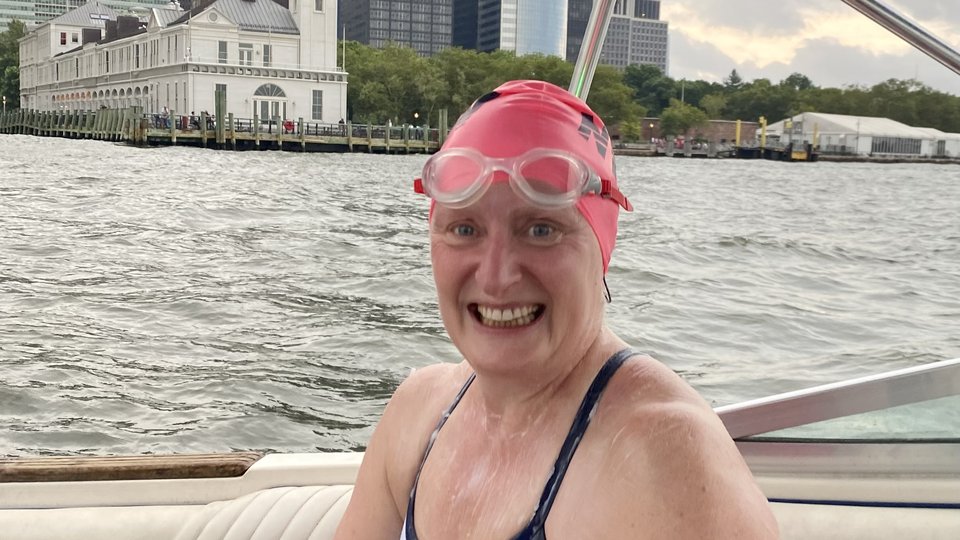
Meet Gráinne Moss: record-breaking Irish open water swimmer
Born in Northern Ireland and now living in New Zealand, Gráinne Moss captured the attention of the world in 1987, becoming the first Irish woman to swim the English Channel, at just 17 years of age. Moss’s story is one of resilience, endurance, and achievement, both as a swimmer and in public life.
Moss’s achievements in 1987 heralded the start of a truly remarkable open-water journey. From victories in Ireland’s open-water championships and the ‘Irish Triple Crown’, Moss has broken records and pushed the boundaries on what Irish swimmers can achieve.
“I felt an overwhelming sense of connection – to the sea, to my roots, to those who cried as they passed this rock, and to everyone who will see it in the future.”
Her accolades are not confined to Irish waters, either. In 2001, Moss became the first Irish swimmer to swim the notorious Cook Strait between New Zealand’s North and South Islands, as well as conquering many other well known channels.
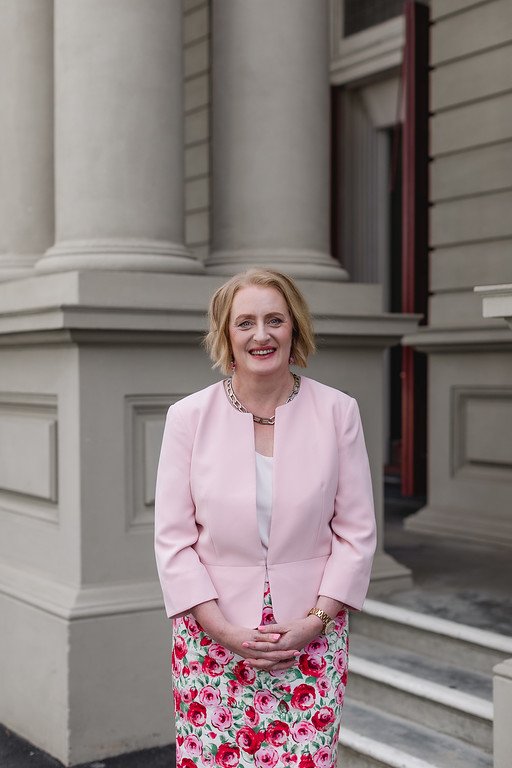
Since calling New Zealand home, Moss has built a career as one of the country’s most senior public servants. The same qualities that carry her through bitterly cold seas have shaped her leadership on land: endurance, clarity of purpose and a willingness to take on challenges.
We sat down with Gráinne to find out more.
Read our interview
Along with your distinguished professional career, you are also one of the world’s most accomplished open-water swimmers. Tell us a little about your background.
“I was born in Northern Ireland and started swimming in the Pickie Pool in Bangor – an unheated saltwater pool fed by the sea. I loved the freedom and adventure of open water from a young age –no swim, even in the same ocean or lake, is ever repetitive!
At 16, I was selected to represent Ireland at the inaugural World Open Water Swimming Championships, and a year later, I became the first Irish woman to swim the English Channel. That swim took nearly 12 hours in rough seas, and my dad and brother lost quite a bit of weight and had to be tied down on the support boat for safety!
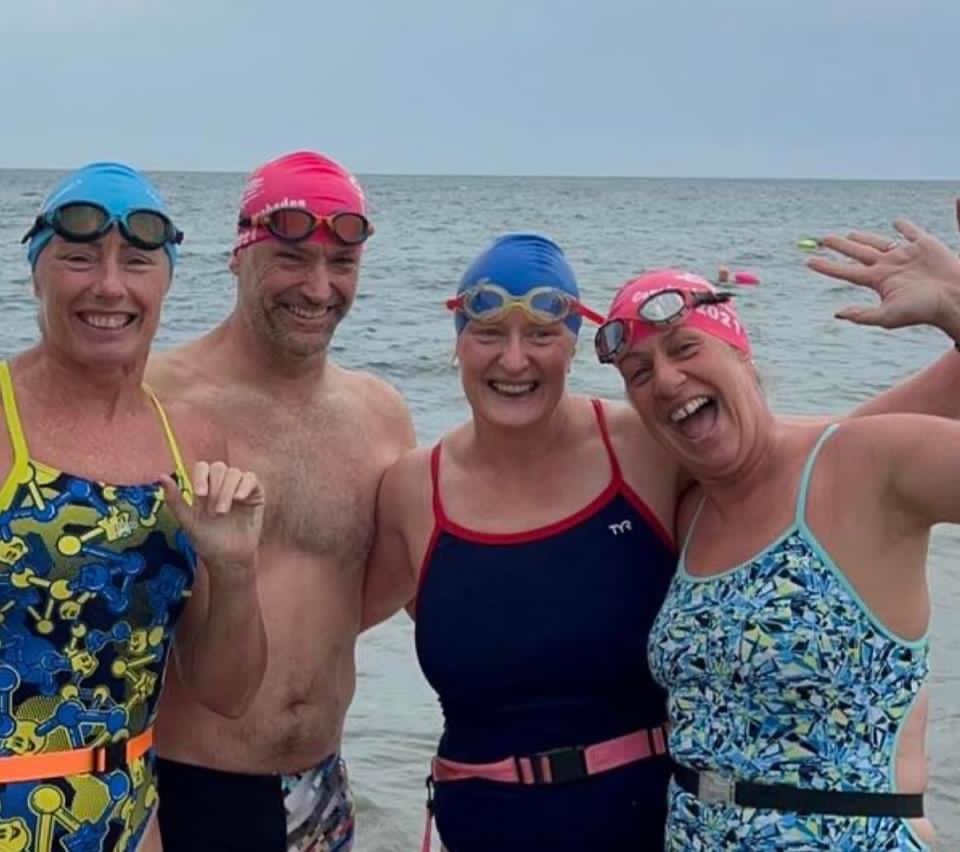
Since then, I’ve swam some of the world’s most challenging channels – from the Cook Strait in New Zealand and the Moloka’i Channel in Hawaii (both firsts for an Irish woman), to the North Channel between Ireland and Scotland, and even a full circuit of Manhattan Island.
I’ve also built a career in both the private and public sectors in New Zealand. I seem to like firsts – in swimming and in leadership. I’m currently the first Chief Executive and Secretary for Regulation in New Zealand, and previously served as the first Secretary for Children. Before that, I was Managing Director of Bupa Care Services NZ, worked at PwC, and hold both an MBA (Hons) and a BSc (Hons).”
You’ve completed some of the world’s most challenging open-water swims. Do you remember the first time you realised, ‘Yes, I can do this’?
“Probably close to the end of the English Channel swim! Competitors from the other 34 countries at the World Championships had told me I could do it. I remember thinking, ‘You’ve got to be kidding me. I can’t do that!’ But I could. And I did.
Touching the beach in France taught me that with preparation, grit, and support, you can do far more than you think. It’s not just about the day of the swim – it’s about the months and years of training, the sacrifices, and the belief that you’ll find a way through.”
How do you measure success?
“One of the most emotional swims I’ve ever done was the Fastnet Rock to Baltimore crossing in Ireland. It’s hard to put into words the wonder I felt out there in the dark, miles from land, swimming from arguably the most historic rock and iconic lighthouse in Ireland – the rock known as “Ireland’s Teardrop,” the last sight of home for millions of emigrants sailing to North America.
I felt an overwhelming sense of connection – to the sea, to my roots, to those who cried as they passed this rock, and to everyone who will see it in the future. It wasn’t about the time or the distance. It was about honouring where I came from and sharing it with the people I love.
“Success for me is deeply personal. It’s not just about finishing – it’s about the journey, the people, and the meaning behind each swim.”
Some of my most meaningful swims were the ones I didn’t finish. My first North Channel attempt in 1996 ended with a huge number of jellyfish stings and vomiting, but I was elated because I’d faced my fears. My second attempt in 1997 ended just 1 km from the finish due to hypothermia, and that one devastated me. But both shaped me. Success is about courage, resilience, and the willingness to try again. And I did – swimming it successfully 27 years later!’
How does endurance in the water connect with resilience in leadership?
“Open water swimming teaches you to stay calm in chaos, work on what you can control, focus on just putting one arm in front of the other, and trust your preparation.
Leadership is similar. You face complex systems, tough decisions, and moments of deep uncertainty. The ability to endure, to stay focused on purpose, and to keep going – even when the tide turns against you – is something I’ve carried from the water into every leadership role.”

What does being part of the Irish diaspora mean to you?
“It means carrying the spirit of Ireland with me – the humour (craic), the resilience, the service to others, the gratitude for a life better than our ancestors, and a love of storytelling and community.
I’m proud to be Irish and proud to call New Zealand home. The Irish diaspora is full of people who’ve made their mark far from home, and I feel privileged to be part of that tradition. I’ve swam in both countries and raised my children in New Zealand. I will always be an Irish open-water swimmer.”
What’s next for you?
“I recently attempted the final leg of the Oceans Seven – the Tsugaru Strait in Japan. After nearly 13 hours in the water, battling a seven-knot current and rough conditions, I had to make the call to abandon the swim. It was tough, but I’ve already applied for a slot to try again next year. I’m not done yet!”
Finally, Ireland or New Zealand – which country does a better cup of tea after a swim?
“Oh, that’s a tough one! To be honest – any cup of tea that you don’t make yourself after a swim is amazing!
There’s something about sitting on the boat after a swim, wrapped in blankets, sipping tea with your family and friends (your crew), and looking out at the ocean. It’s hard to beat… that deep satisfaction of a welcome cuppa and a job well done.”