


Reindeer bodhráns
Bjarne Stensrud’s Norwegian take on a traditional Irish instrument
Few musical instruments are as closely associated with Irish traditional music as the bodhrán, a circular frame drum. The unique style of drumming the bodhrán is one of the hallmarks that gives Irish traditional music its special sound. Bodhráns, once largely the preserve of a few famous Irish makers, today are made all over the world, from Germany, Japan to the USA and indeed, Norway.
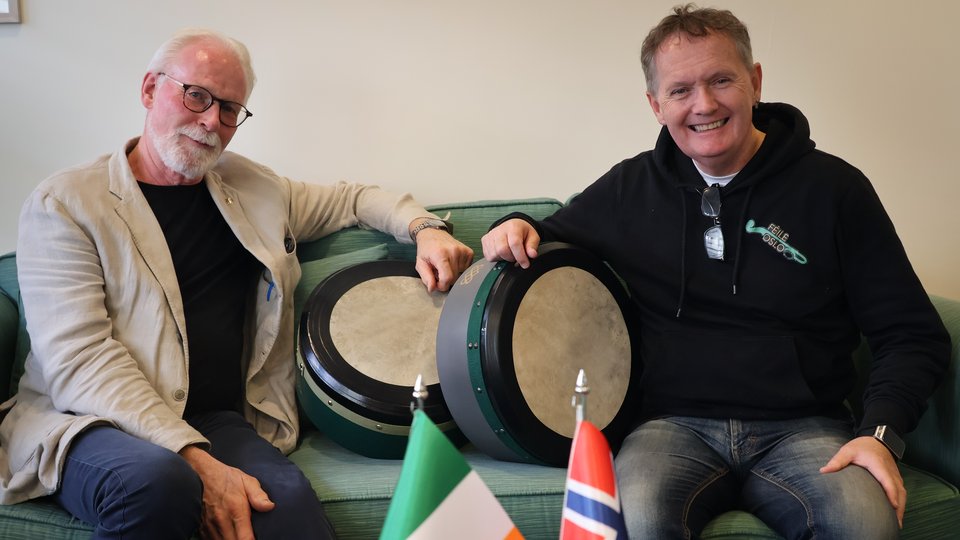
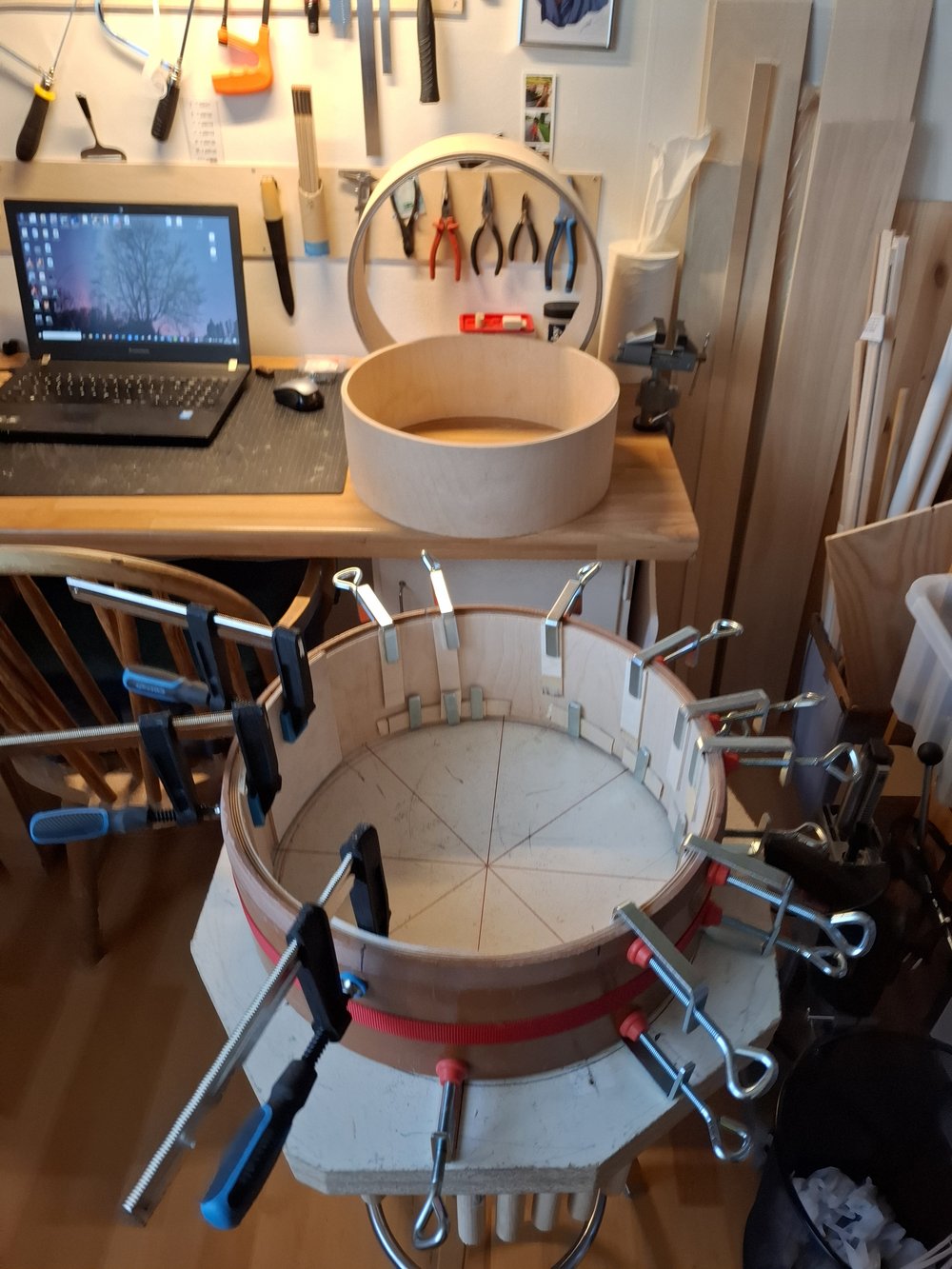
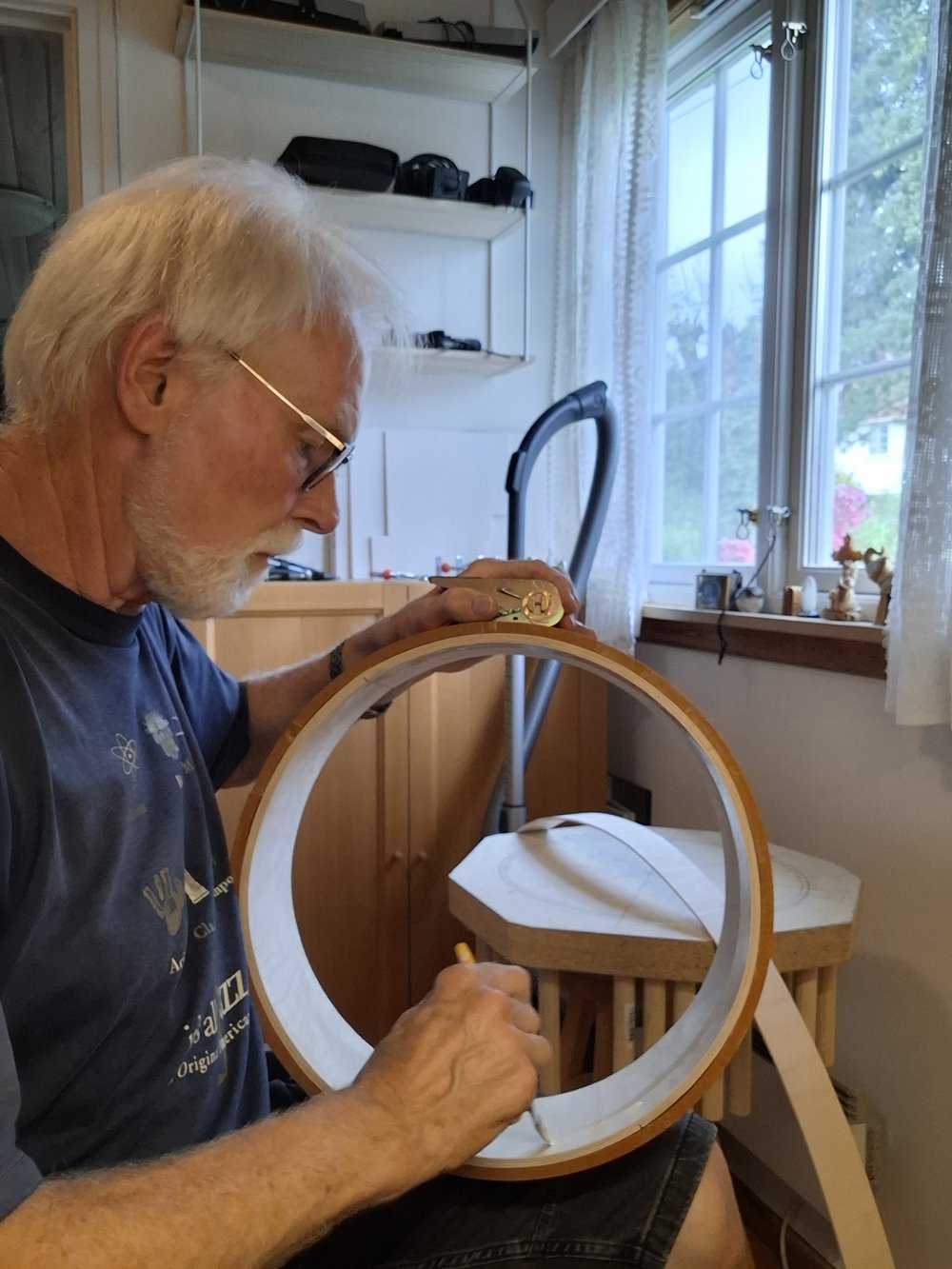
Bjarne Stensrud makes his unique bodhráns at home in his workshop in Oslo, with reindeer skin from Norway’s west coast. They are each the product of many months of labour.
Irish music inspiration
Stensrud – a stage manager at the Oslo Nye Teater for over 50 years and with experience as a technical manager at both the Lillehammer winter and Atlanta summer Olympic games – had never made musical instruments before, but was encouraged in his endeavour by Oslo-based Irish musician and music teacher Brendan Monaghan. Monaghan has played with some of the biggest names in Irish music and on some of the world’s biggest stages like Carnegie Hall and even at the White House for President Clinton.
“Everybody, who has anything to do with bodhráns, says it depends on the skin. So [a bodhrán maker] can perfect everything apart from the skin,” says Stensrud.
“Bodhráns: the name, as you know, comes from the ‘deafener’ and traditionally everybody thinks that the bodhrán is one of the oldest instruments there is. But, truth be told, it wasn’t properly introduced into Irish music in the early 1960s,” explains Monaghan.
In addition to his playing and teaching, Monaghan is one half of the team behind the Emigrant Support Programme-supported Féile Oslo. “It was Seán Ó Riada who introduced it to Ceoltóirí Chualann, but before that it would have been used on St Stephen’s Day, for the wren boys. Hence why there was usually a cross stick in the back of the drum. They wouldn’t have put their hand on the skin itself. So it would have been held and open toned, just hitting the drum but not actually playing along with reels and jigs,” he says.
Charlie Byrne of Kerry was among the most famous early makers of the bodhrán in Ireland. Monaghan describes Byrne’s instruments as “the go-to bodhráns, because his were the best.” The drum skin was traditionally goatskin, which was buried with lime in order to de-hair it.Any remaining hair was scrapped off and stretched before being applied to a drum frame.
While some people took the view that the bodhrán should be played with a pen-knife (attributed to Seamus Ennis), what makes a bodhrán unique as an instrument compared to other similar drums is that by striking the drum on both sides, you could mimic the sound of Irish dancers’ feet.
Evolution of the bodhrán
The bodhrán has varied in size over the years, with Seamus O’Kane making them slightly smaller, at a sixteen-inch diameter, while also making them deeper. He also innovated by providing a system for tightening and loosening the skin. It is this classic model that Bjarne used for his bodhráns.
Stensrud sourced his reindeer skins from a tannery on the Norwegian west coast. He had worked all his life in stage management and had no previous experience as an instrument maker, so the learning curve was a steep one. “With the first drums, I thawed the skins that had been sent to me deep-frozen, and put it in cold water, took it out again, drip dried it off and put it on the drum, missing out one vital step. Namely, stretching the skin on a frame. That’s one of the reasons why I had to take the skin off and replace it on the frame of one of them, because I hadn’t stretched it. I’ll never forget that step in the process again!” he laughs.
For Stensrud, the ambition in taking on this project was a straightforward one: “I wanted to get this right, so that there was a playable instrument. It is no big deal to make a thing like that look like a bodhrán. But to make it play like a bodhrán is something quite different. I really relied on Brendan to guide me in that respect,” he says. “As everybody says, it comes down to the skin and the way it is put onto the frame.”
Finding the perfect bodhrán mould
One of the first attempts Stensrud made seemed to be successful, before he realised that the frame was not perfectly round. This meant that there were small gaps between the tuning rim and the outer frame, which produced a rattling sound when it played. The Norwegian climate was another challenge that had to be considered as the skins can dry out in the cold.
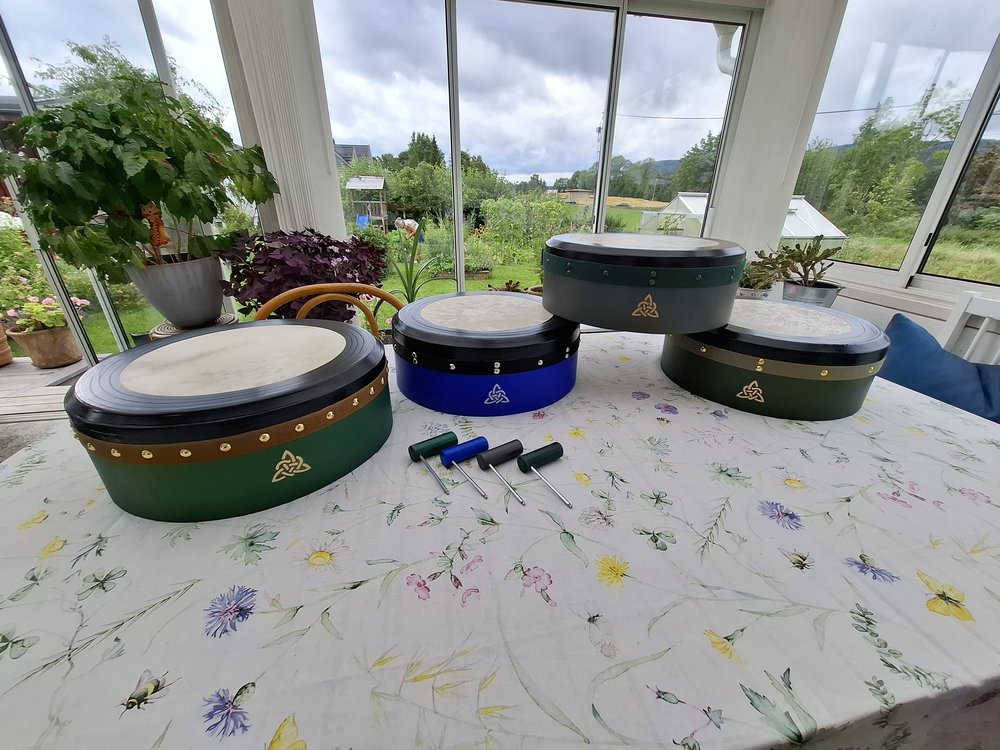
After much experimentation and attempts to find the perfect mould (which he was supplied with after a chance encounter with a local plumber), Stensrud has crafted a number of bodhráns, a few of which are now for sale in one of Oslo’s best-loved music shops, Hornaas Musikk.