


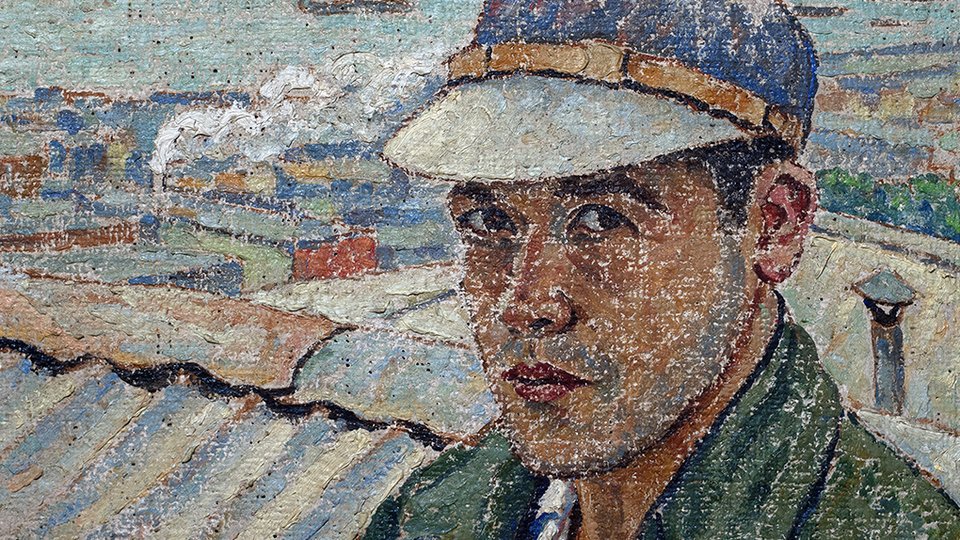
Unveiling the forgotten genius of artist Jim Mendoza Mac Ray
As part of our Cultural Nights series at the Embassy of Ireland in Santiago - an initiative to celebrate the richness and diversity of Irish culture and its connections around the world - wewere honoured to present an evening dedicated to the life and work of Jim Mendoza Mac Ray (1905–1963), a thus far forgotten figure in Chilean visual arts.
Esteemed journalist, editor, and researcher Marcela Küpfer, who has played a key role in bringing Mendoza's work into the spotlight, led this special event. Her 2010 book Jim Mendoza, pintor de abismos (painter of abysses) was awarded a Literary Creation Grant from the Chilean Book and Reading Fund and provides an in-depth exploration of Mendoza’s complex life and remarkable artistic legacy.
"Jim Mendoza Mac Ray was an enigmatic and brilliant artist who painted fervently in Valparaíso during the first half of the 20th century. Of Mapuche and Irish descent, he began his artistic journey while working as an orderly at the old Deformes Hospital. By the mid-1950s, he had created around 70 works of significant artistic value, including urban landscapes, portraits, and depictions of everyday trades,” says Küpfer.
Though he participated in group exhibitions and won awards, he rarely sold his paintings. He died in obscurity, and after his death, those who recognised his talent recovered his paintings.
“Though he participated in group exhibitions and won awards, he rarely sold his paintings. He died in obscurity, and after his death, those who recognised his talent recovered his paintings and organised a major retrospective at the National Museum of Fine Arts, which astonished critics. Today, only a small number of his works are in public collections, including his masterwork Los Patipelados, housed at the Pinacoteca of the University of Concepción," she explains.
Mendoza’s early work
Mendoza was born in 1905 in the province of Lebu to a Mapuche father and an Irish mother, a unique heritage that profoundly shaped his identity and perspective. He later settled in Valparaíso, where he worked as a labourer at the Enrique Deformes Hospital and painted prolifically, producing around 70 works that captured the soul of the El Almendral neighbourhood and its people. His urban landscapes, portraits, and depictions of working-class life offer a raw, powerful lens on the social fabric of Valparaíso in the early 20th century.
Despite being self-taught and struggling with mental illness throughout his life, Mendoza's artistry spanned a remarkable range - from impressionist influences to cubism, muralism, and intense expressionism.
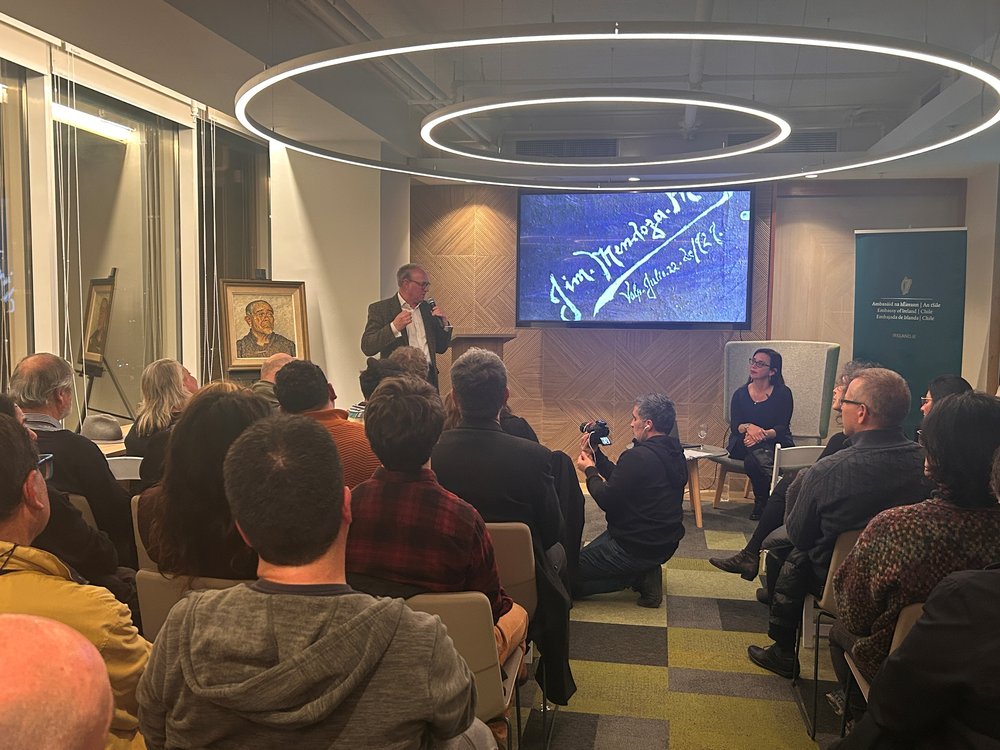
His work remained largely unrecognised during his lifetime. Tragically, after the death of his wife in 1963, Mendoza died soon after in poverty and isolation. Following his passing, many of his paintings were auctioned off by his landlady to cover debts, with only a few works making their way into public collections.
Thanks to Marcela Küpfer’s tireless research and the efforts of several collectors and institutions, Mendoza’s oeuvre is now gradually being recovered and appreciated. His legacy has reached institutions such as the Museo Nacional de Bellas Artes in Santiago and the Toledo Museum of Art in the United States, offering a glimpse into a powerful artistic voice that was nearly lost to history.
A special highlight: El Loco (The Madman)
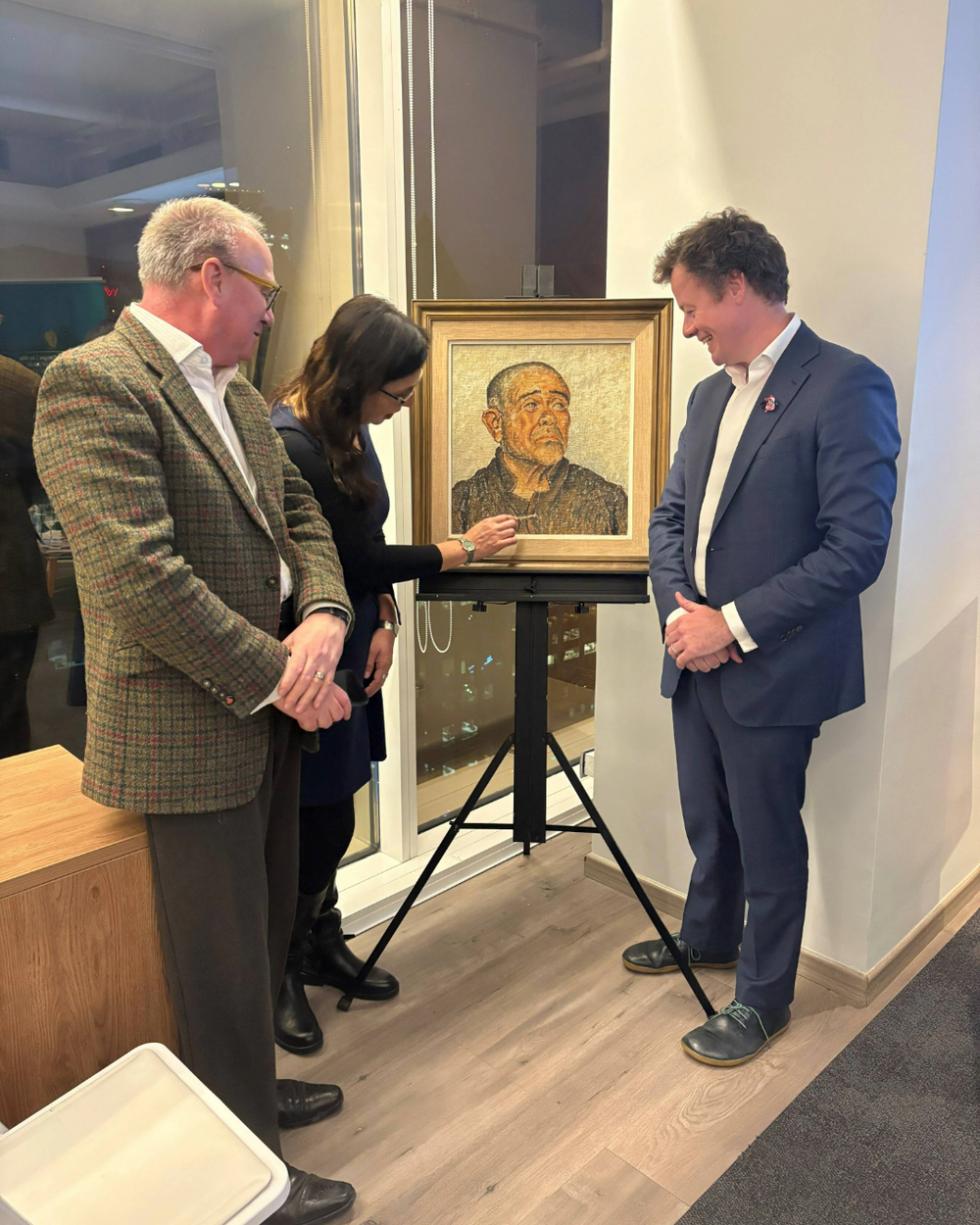
One of the focal points of our Cultural Night was the rare opportunity to view Mendoza’s striking self-portrait El Loco (Oil on cardboard, 46 x 43 cm), painted during his treatment at the Psychiatric Hospital of Santiago.
This deeply personal and haunting piece reflects Mendoza’s inner struggles and his profound emotional depth.We are especially grateful to the Corporación Cultural Las Condes for their generous loan of El Loco.
Honouring Irish-Chilean heritage
Mendoza’s story is not only one of local significance. As the son of an Irish mother, his life and work reflect the deep and often unexpected ways in which Irish heritage has taken root across the world, especially in Latin America. Through his paintings, we gain a unique lens into a historical and cultural moment that blends Irish, Mapuche, and Chilean identities.
Jim Mendoza Mac Ray’s work reminds us of the power of art in transcending time, culture, and silence. In honouring his legacy, we reaffirm our commitment to uncovering and celebrating Irish stories—wherever they are found.
We extend a heartfelt thank you to Gregory Dunne for bringing this story to the Embassy’s attention and for his dedication to sharing the cultural legacy of Mendoza Mac Ray.