


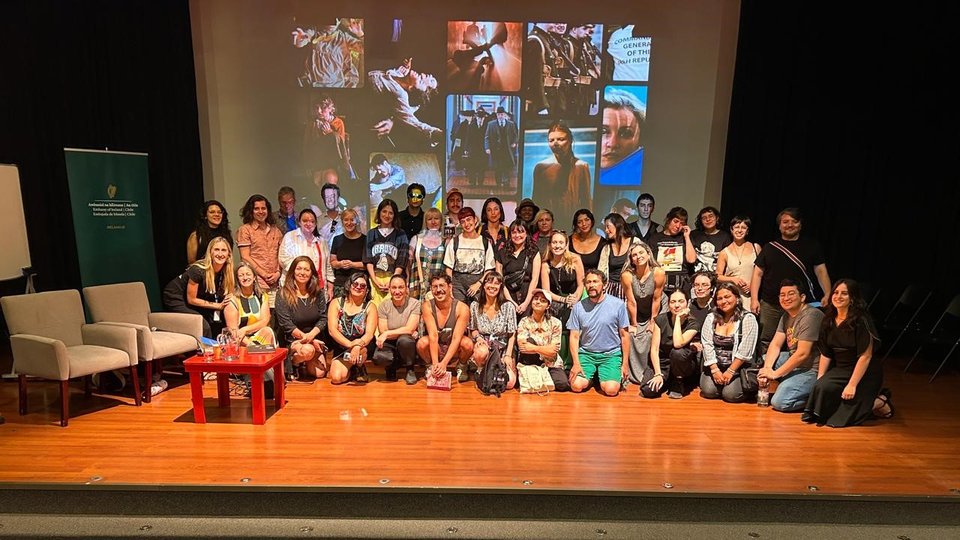
Women writers from Ireland and Latin America
To mark the start of the new season and the celebration of the abundance of creativity Irish women possess, three Irish women writers -novelist Eimear McBride, playwright Louise Lowe and poet Nadhi Zak/Aria Eipe - toured the Latin America region.
On their visits they conversed with local writers, met with Irish Studies Chairs and shared their work in multiple events hosted in museums, bookstores and festivals.
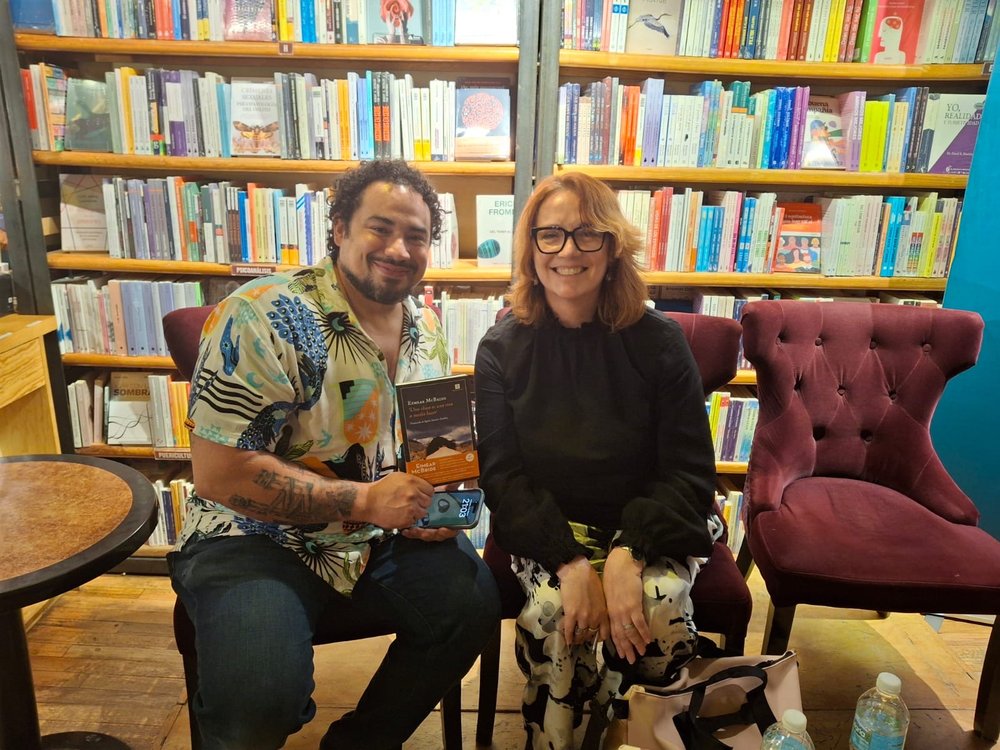
Fiction, gender and language collide in Mexico
Eimear McBride’s visit to Mexico wasn’t just another literary event—it was a deep dive into the power of language and storytelling. With her boundary-pushing novel A Girl Is a Half-Formed Thing, McBride challenged audiences to rethink how fiction can express the complexities of identity and gender. Engaging with renowned Mexican literary figure Ave Barrera, she sparked conversations that bridged Irish and Latin American literary traditions.
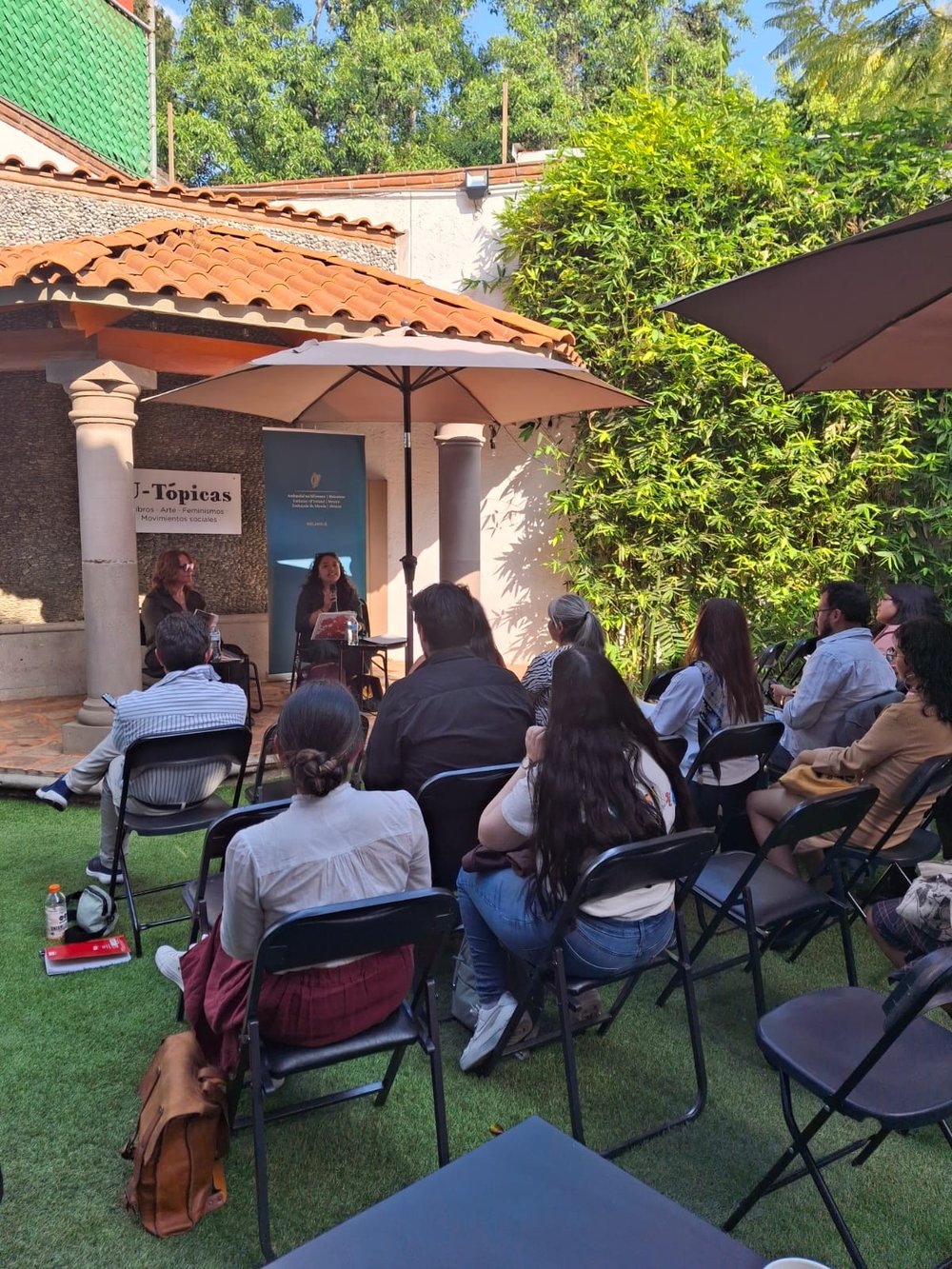
In the heart of Mexico City, McBride captivated readers, students, and literary stakeholders alike. Despite the fact that only a fraction of her work has been translated into Spanish, the enthusiasm was undeniable. Sold-out events at Utópicas and Péndulo bookstores proved that Irish literature has a home in Latin America, setting the stage for a lasting cultural exchange and collaboration.
Theatre as a time machine: Memory and history in Chile and Buenos Aires
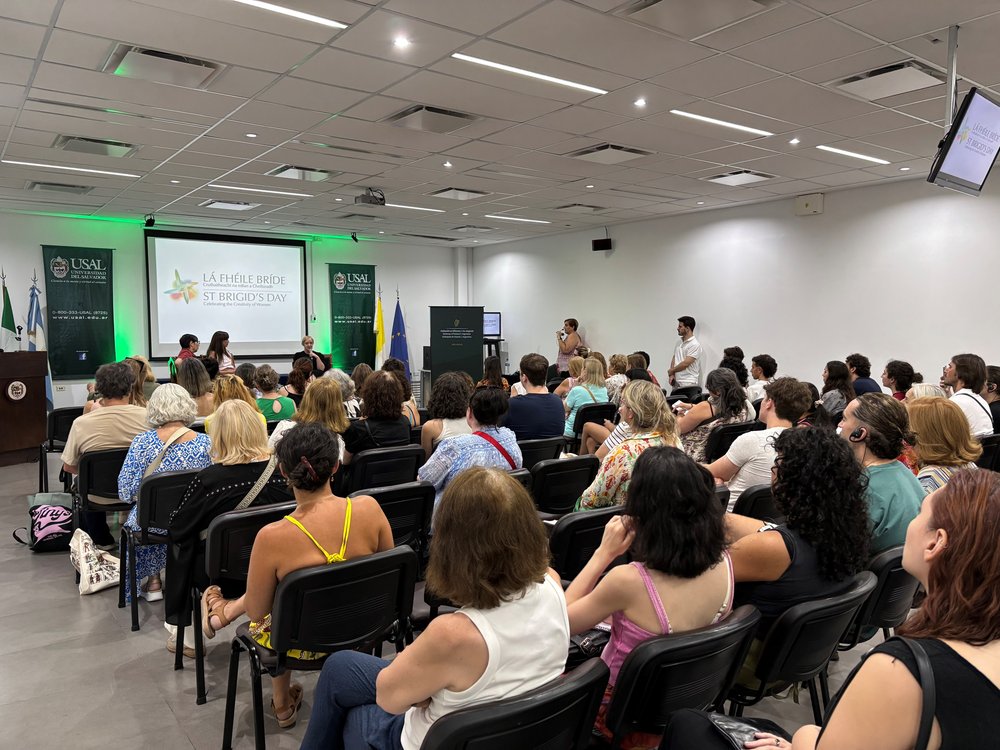
Playwright Louise Lowe brought history to life in Santiago and Buenos Aires, proving that theatre is more than just performance - it’s a powerful medium for storytelling, memory, and activism. Her work, deeply rooted in social history and gender dynamics, struck a chord with Latin American audiences, particularly in Argentina, where discussions focused on the evolving role of women in theatre and the arts.
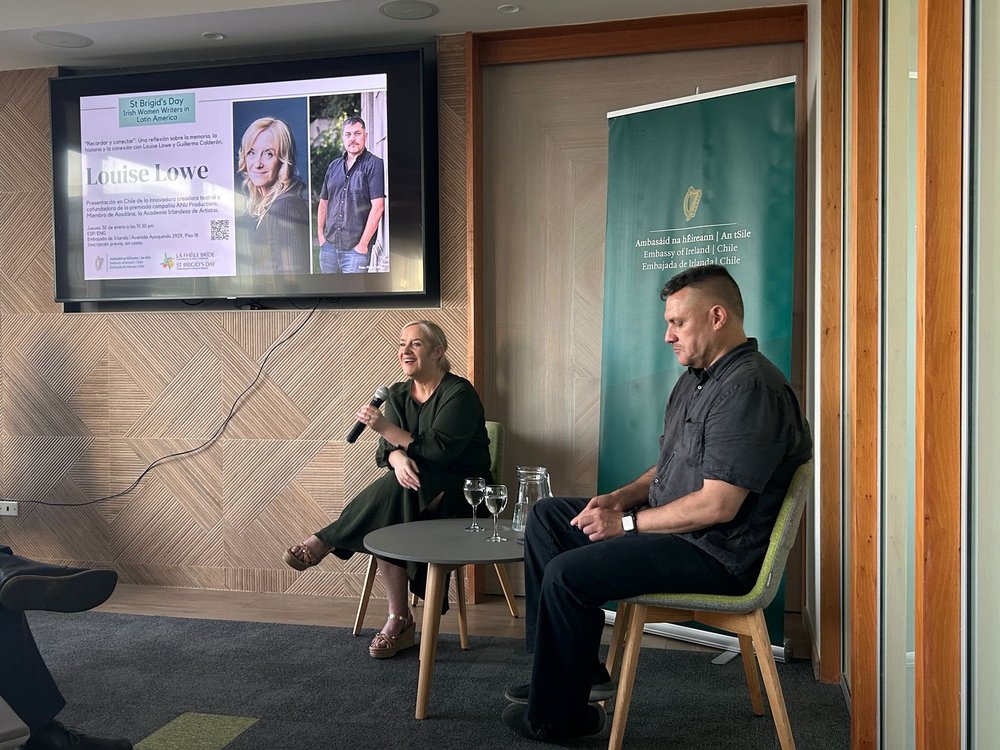
Lowe’s time in Buenos Aires created vital connections between Irish and Argentine creatives. A thought-provoking panel led by actress Malena Solda shed light on the gendered challenges in theatre, drawing parallels between the two nations. Meanwhile, in Santiago, her involvement in the Santiago Off festival introduced her work to a new audience, embedding Irish theatre in one of Chile’s most exciting artistic landscapes.
Hear more about their tour through Latin America below
Poetry in Motion: Translating and Performing in Brazil
In Brazil, poet Nidhi Zak/Aria Eipe added a multilingual and dynamic element to the programme. Through poetry readings and thought-provoking discussions in Brasília, Rio de Janeiro, and São Paulo, she introduced Irish poetry to a captivated Brazilian audience. Beyond just reciting verses, through her poetry, she created a space for dialogue on language, translation, and cultural identity.
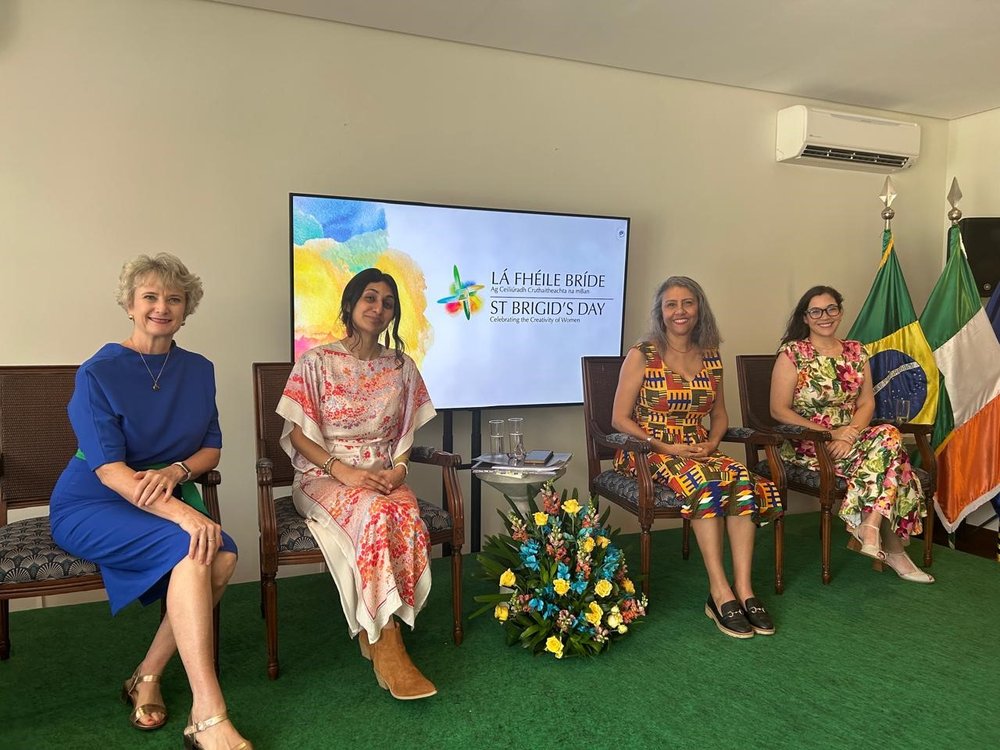
"It was fantastic to come to Latin America because my influences in early writing life were actually Latin American authors like Gabriel García Márquez, Gabriela Mistral and it’s been such a joy to come here and speak to the students at the university in Sao Paolo and Brasilia”
Knowing that accessibility was key, Nidhi collaborated with Brazilian academics to craft informal Portuguese translations of her work, making her poetry resonate on a deeper level. At the University of Brasília, the National Library in Rio, and the Travessa Bookshop, audiences engaged with her bilingual performances with enthusiasm. The digital world also played its part - live-streamed events helped extend the conversation far beyond the physical venues, cementing her impact in Brazil’s literary scene.
Conversations across the Atlantic
The Women Writers from Ireland and Latin America programme went beyond showcasing talent - it was about creating lasting connections. Across Mexico, Argentina, Chile, and Brazil, Irish writers found new audiences, sparked essential conversations on gender and identity, and laid the groundwork for ongoing collaborations. The energy and engagement surrounding these events prove that the appetite for cross-cultural literary exchange is stronger than ever.
With momentum on our side, the future looks bright for Irish literature in Latin America.