


“There’s a lot I haven’t asked”: Ireland and Manchester oral connections
Generations of Irish emigrants have travelled far and wide to create new lives for themselves. From Sydney to New York and Riga to Beijing, many Irish left their families and friends for a new life far from home.
However, not all of the Irish travelled too far. In what is known as the Northern capital of England, one can find vibrant and active Irish communities thriving and telling their ‘Irish-Mancunian’ tales.
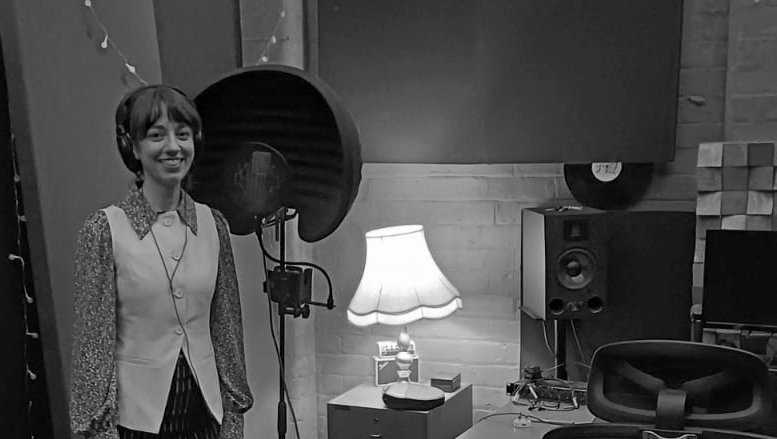
Seeking to preserve these personal stories, Hannah Donelon, a child of Irish parents and Manchester native, has created the podcast ‘There’s a lot I haven’t asked’. Donelon collaborated with renowned Irish musician, Michael McGoldrick to create this inspiring podcast. It’s an exploration of identity ,the Irish immigrant experience in Manchester, focusing on both emigrants and their descendants growing up in Irish households.
We sat down with Donelon to discuss the creation of the podcast, the stories she heard along the way, the new friendships and connections she has made and the importance of sharing and preserving these oral histories.
Read the interview with Hannah Donelon
What is your connection to Ireland?
“My mum is from Kerry and my dad is from Galway, and they emigrated separately to Manchester in the 60s. Like many Irish marriages of a certain generation here in the UK, their relationship blossomed in the glitz and glamour of a dance hall.
We would also go back every year for our summer holidays which was just the most exciting point of the year ever. That’s why in the second half of the podcast we interview people like me, who grew up with Irish heritage and look at aspects of our childhood like those summer holidays – the sheer excitement of boarding the boat to get over to Ireland!
I grew up in what I can only describe as a very-Irish household in the centre of Manchester so was really excited to look at those shared experience for others in the Irish diaspora who are Manchester-born: how normal it was to have RTÉ radio constantly on in the background connecting us to ‘Home’, and things like learning how to jive and waltz in the kitchen..’
Where did the idea of the podcast come from?
‘Well there’s a lot of points that I could trace it back to. I suppose the fact that I was singing at Irish funerals meant it was in my head for quite a few years and that, sadly capturing these accounts, is time sensitive. The eulogies as well at these funerals are always absolutely beautiful and I see so many shared experiences for those both Irish-born and Manchester-born. The person giving the eulogies, usually a son or daughter, always has so much pride in their parents’ emigration story: their resilience, their hard work, their culture.
But to really pin point it to a specific place and time, I was in Ireland last year with my parents. I have three older brothers but it was just me on this trip, so maybe there was more time to just chat to my parents, but they were telling me all these stories and their childhood was just worlds apart from the one I have had.
I was shocked at the stories but I was more shocked at the fact I didn’t know them. That’s where the phrase ‘There’s a lot I haven’t asked’ came from because I thought there’s a lot more I need to ask them.
And then, just thinking of that period of mass emigration to cities like Manchester and the legacy it still has in Manchester. I am not a historian or an academic so I was coming at it from an actor/writer perspective and therefore wanting to lean into personal accounts of that era: which I believe brings out so much nuance, humour, and relatability.'
What was your goal in creating the podcast?
‘One of the main reasons for creating the podcast was to promote the idea of having pride in your identity and heritage. For many second or third generation Irish-Mancunians, we can fluctuate in our confidence in our Irishness, so the podcast hopefully serves to highlight the often-underrepresented (and under-celebrated) aspects of our identity and the legacy that has been left to us.’
What was it like to meet these people and hear their stories?
‘I formed so many friendships throughout the podcast. We also post pictures on our Instagram relevant to each episode, so people that I have interviewed have sent on photos of things or places they mentioned in the interview and their passion to do so is really eye-opening; we really love having platforms that help us explore and celebrate our history.
I have also had many of the podcast contributors who’ve asked oh can you put me in contact with another person who spoke about XYZ because I shared that experience and I would love to catch up with them about it. So many friendships have been formed!
Ultimately though, meeting these people and hearing their stories just reinforced my pride in how much the Irish have overcome to integrate into Mancunian life, and how much our parents and grandparents have sacrificed - and indeed been through - to give us the life we have now.’
How did you find the storytelling process when interviewing participants?
‘Something that really struck me, and it happened a lot, was when I went to talk to them, almost everyone, would say ‘I don’t know if I have anything to say or I don’t know if I have anything worth sharing’ and then two hours later you would have so much golden material.
For a culture that is steeped in such strong oral traditions, personal storytelling within Irish culture, in my experience anyway, is a little different and I could talk for hours about why I think that is but largely I think the Irish aren’t used to tooting their own horn! But there’s a danger of losing so many stories because of this! Maybe the person who holds these incredible memories and stories takes them for granted because for them, it’s just their everyday life, it’s ordinary. So, I hope the podcast series has inspired people to share their stories and also maybe ask more questions to people from older generations.
I said it in episode 8 that there is always going to be a lot unsaid between generations but hopefully the series serves to encourage more storytelling.’
Many of these stories are often lost over time, what has the feedback been like from listeners of the podcast?
‘We are receiving so much wonderful and encouraging feedback for the podcast (whether through a survey we sent out or on podcasting platforms like Spotify and apple). One that sticks out in my mind at the moment is a listener who wrote in saying she sadly never got the chance to ask her grandmother about her life growing up in Ireland but this series has helped her imagine what it might have been like.
It’s also been wonderful hearing that there are people in other UK cities and other migrant communities relating to aspects of the series!
What was it like launching the podcast?
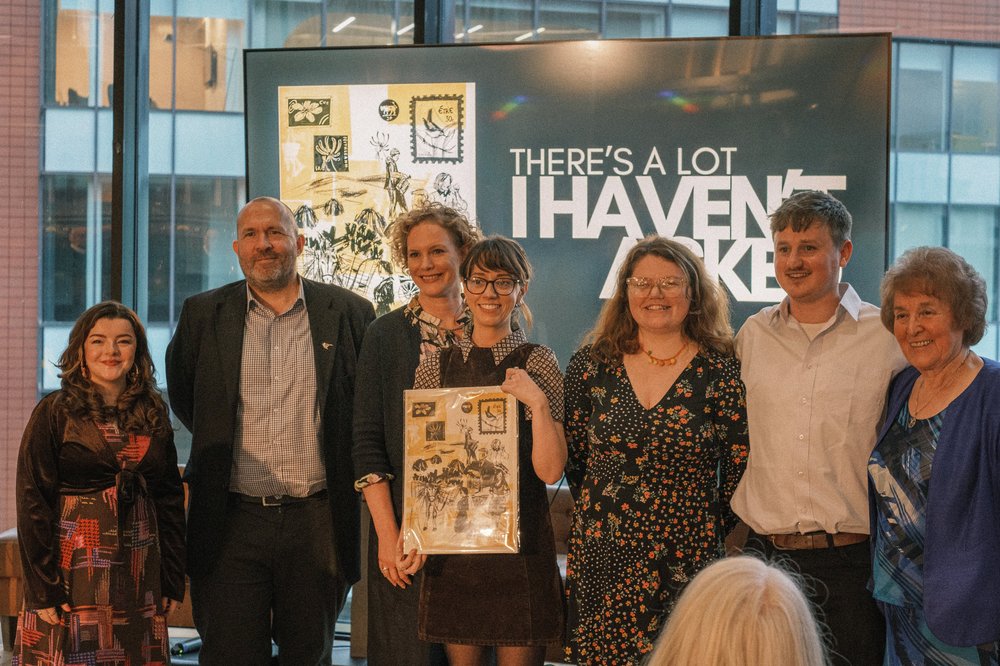
‘We had a launch night and what was really beautiful was having everyone in the same room, the younger generation and older generations and to be able to say to the older generation that we are so proud of everything that you have overcome, that you might think it’s so normal the challenges you overcame here but we are able to say, because of the sacrifices you made, we have these opportunities now.
It was a really special night and particularly because of that intergenerational aspect.’
How important is the audio aspect of this project?
‘Well you can reach so many people through audio and listeners are also able to return to it for a second, third, fourth listen. Blueprint have been incredible creating the sound effects to immerse listeners even more deeply into the stories so hopefully it is an intimate experience for a listener where their own memories are ignited.
I just thought it would be really intimate to have an immersive audio experience, that someone could listen to alone and would maybe ignite their own memories.
What was the experience like actually creating the podcast?
‘I was thinking about this the other day but I must have just gone into auto-pilot. There was so much material and so much that did not make it in. When we were doing the interviews I was just fully immersed in that interview and really enjoying just going to someone’s house, spending two to three hours with them.
-
Episode 1
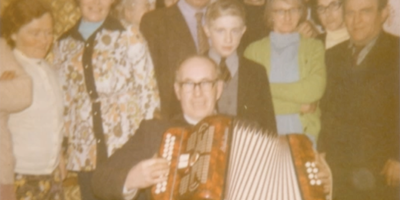
One of the house dances Mary, Nellie, Sheila, and Rose talk about at the end of the episode. This is a photo taken at one in Rose’s house.
-
Episode 2
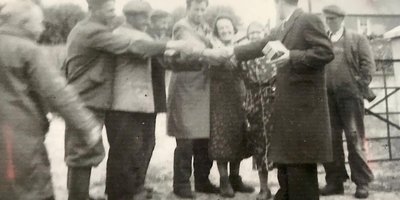
Tommy's own farewell in 1952 to his neighbours in Mayo the day he left for England.
-
Episode 3
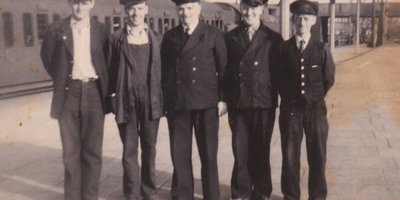
Gerry, second from the left, in 1960 with a group of work mates (including brother Curly in the middle middle).
-
Episode 4
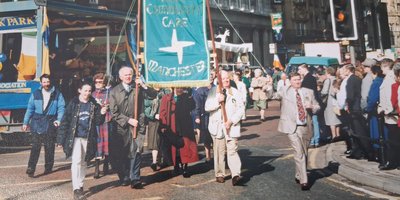
Photo of Irish Community Care in the Manchester St. Patrick’s Day parade from the Irish Community Care office in Levenshulme
-
Episode 5
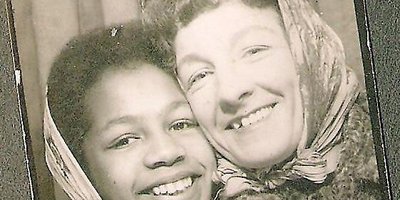
Ann Eva Rufai with her mum, approx 1965. ‘’This picture was taken in a booth. She used to take me into city centre - into town and she used to say come on, let's go and have scones and jam! Don't tell your dad'
-
Episode 6
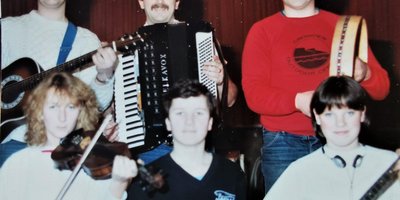
The band Curragh in the 1980s. Heading for their tour of Ireland following their Band On The Wall gig. Back row L-R: Martin Coult, Eamonn O’Neal, Sean Wood and Front row L-R: Caroline Usher, Paul Usher, Angela Usher.
-
Episode 7
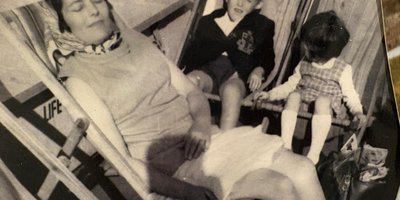
One of the first trips to Ireland Trish can remember. ‘’I remember it because we got photographs of me and my brother. And they used to have deck chairs out on the deck. And my brother had his school blazer on so that must have been like his best clothes. The fact that he was travelling in his school blazer.’
-
Episode 8
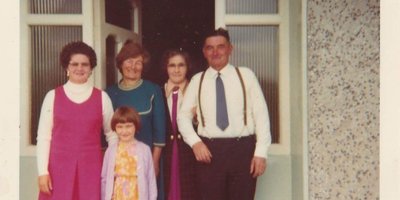
Margaret's Holidays in Kerry
I had an idea of what each episode would be, so episode one: life before immigration, episode two: look at the journey of what it was like to go from Ireland to Manchester, so I kind of had a sense of what each episode would be about. But when we came to look at all the material I had I could see so many cross-overs and I think that’s essentially what steered me in scripting it.
But yes it was quite hard sticking to the limitations of each episode – in fact we ended up adding on episode 7 and 8 because there was just too much amazing material that I just couldn’t part with.’
What was it like working with Irish musician Michael McGoldrick?
‘Working with Mike as well was absolutely amazing because he's this world renowned Irish traditional musician but who also got the project just so intrinsically. He's grown up here so he could recognise himself in some of the stories.
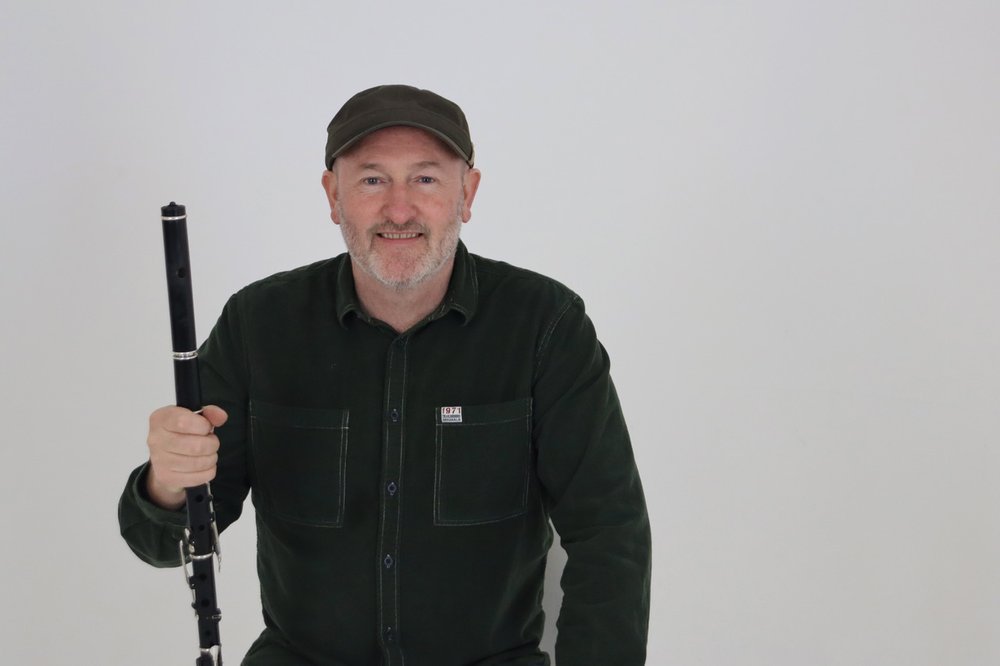
He was so passionate about it and he was really encouraging throughout, because I've never done anything like this before. So to have someone like Mike who's completely a professional, encouraging me was really helpful.
Then, when I'd listen to his music he was really sensitive to the stories and it would always just completely elevate them.’
How impactful was the Irish network for this project?
‘Incredibly impactful – this project is directly a testament to how we thrive together because the heart and soul of it really is the Irish network of Greater Manchester. In fact, in episode six, Michael Walsh, one of the contributors, discusses his time working for Irish Community Care Manchester, and through his stories, he highlights the impact the Irish network has on our daily lives here and, how for so many, the network is actually a lifeline.
But to bring it back to this specific project, since the establishment of the Consulate here, there has been such a palpable boost in the Irish diaspora’s self-esteem here.
And for this project specifically, the Consulate has been incredibly supportive - I simply wouldn’t have been able to do it without their backing. Sarah Mangan was the very first person I spoke to about the idea and she immediately gave me not only advice on how to go about it, but the conviction and encouragement to do so.
It’s so special to have that support. When I was delivering invites to the launch, Ailish at the Consulate had made the most beautiful invites, you know which naturally included the Irish government logo on them, and distributing them to the people who participated in the series, I could sense a lot of pride in them being a part of this project and being seen by the Irish government.'
What have you learnt from creating this podcast?
'Well on a personal level, I will walk around Manchester now and I'll be like, oh, my God, that's the place where Liam got the lorry with other Irish men at 6am every morning, that’s the place where Eamonn saw Manchester for the first time as he stepped off the train, that’s the place Catherina was rejected accommodation on account of her being Irish.
There is also a park near my house now that I would go to all the time and I found out that that's the park that the Irish would go to in the 60s, 70s, 80s, when the pubs would shut early on a Sunday. They would all congregate in that park, listen through portable radios to the GAA matches, and hopefully find a date for the next dance. I'm walking around that park now, imagining all these scenes.
But the biggest thing I’ve learned is that it isn't one size fits all.
Also, I’ve grown up with parents who came from the south, and heard their experiences of what it was like to not want to leave home. But then, there was a woman I was talking to from the north, and during her childhood it was difficult, even dangerous, for her to express and explore her Irish identity in the North. So she said that for her, coming over to Manchester actually gave her a freedom to express her Irish identity that she didn't have back at home at that time.
The breadth of experience; some people would come over here, they would see the signs, no blacks, no dogs, no Irish, they faced really awful discrimination and couldn’t secure work and/or accommodation because of it. Then for others, it was English people that helped them integrate so it was really different for everyone and again just that idea of it isn’t one size fits all.
The Irish have proven themselves through resilience and through strength; they've proven their place here.’