


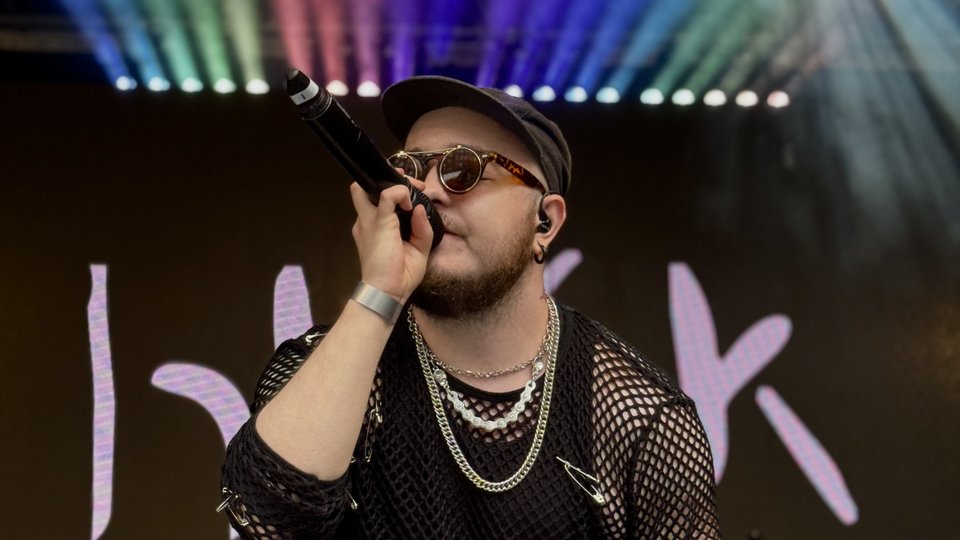
Living Loud: Alfie Austin's community building in Manchester
In almost every city where Irish people have settled, individuals usually emerge who shape and strengthen their communities in extraordinary ways. In Manchester, one such figure is Alfie Austin, a musician, activist and the Cultural Activities Coordinator for Irish Community Care Manchester.
Meet Alfie Austin
Alfie Austin is a trans masc and non-binary musician, who plays with other musicians making Irish Trad with Electronica and Folk, singing in both Irish and English, under the artist name HUSK, heard across RTÉ and BBC and performing across stages in the UK and Ireland. Their music has ‘Púca Punk’ energy with an implicit queerness to it, allowing for fluidity.
Austin also works with Irish Community Care Manchester, an integral part of the Irish community in Manchester. The community centre offers a range of services that support all groups such as Irish Travellers, LGBTQIA+ people, young Irish men, and women of Irish heritage with the Manchester Cailíní group.
Austin is the Cultural Activities Co-ordinator, promoting Irish culture, connecting people to their heritage and providing care and community through the work they do too.
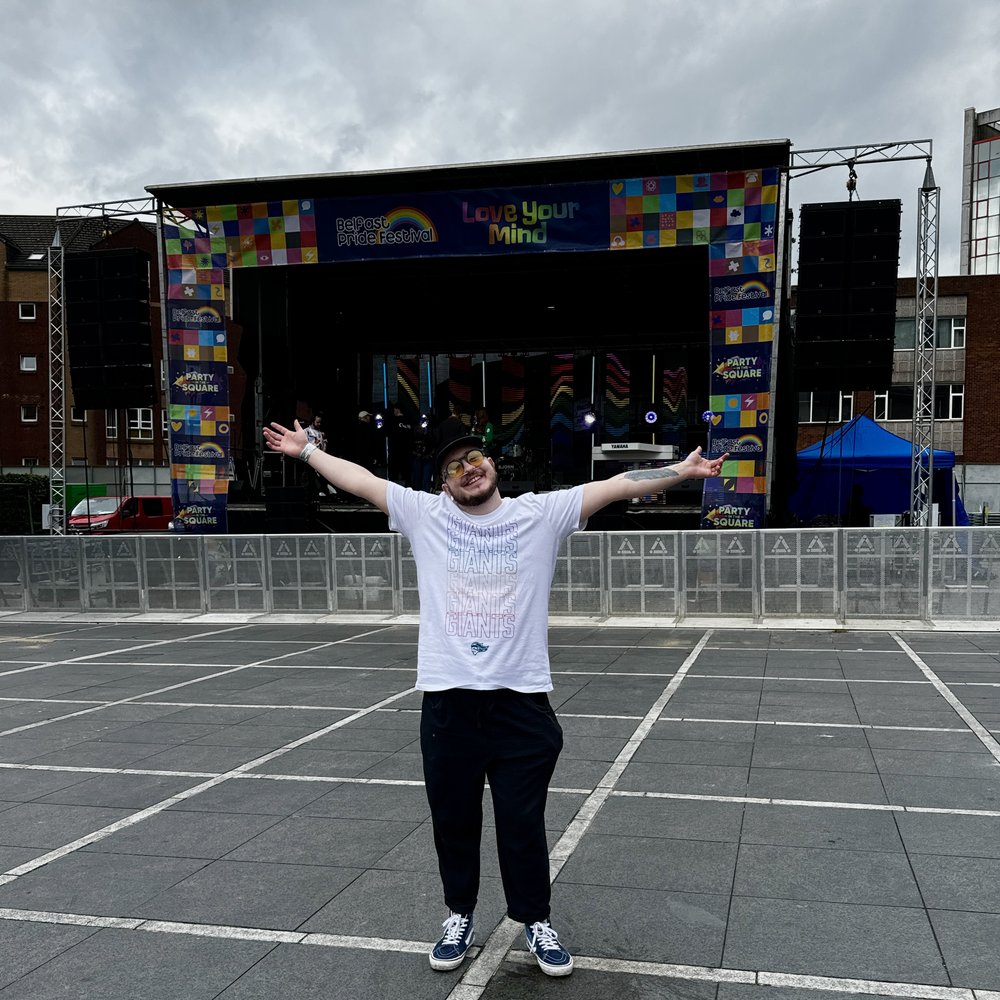
Learn more about Alfie and their work
What is your relationship with Ireland?
“My maternal side are from Co. Westmeath and emigrated to Salford. I also spend a lot of time in Belfast for the trad music there, the Belfast Giants ice hockey, and to brush up on my Gaeilge Uladh. So, it deserves an honourable mention.”
What got you into your role in Irish Community Care Manchester?
"My first contact with Irish Community Care Manchester was when I performed at one of their St Patrick’s Day fundraising events with HUSK. A few months later, I landed the role of Cultural Activities Co-ordinator, which I absolutely love!
With the community engagement team, we support the Irish and Irish Traveller communities in Greater Manchester through a wide range of cultural activities, connecting people to their heritage, supporting social, physical and mental wellbeing needs, and promoting Irish culture.”
How important are community supports for Irish abroad & LGBTQIA+ people within Manchester?
“The data shows that the Irish abroad are important to Ireland, and the diaspora feel that Ireland is incredibly important to them. Irish people have specific needs and cultural sensitivities so it’s important that they’re supported abroad to keep a connection that rich culture as well as navigate the basics like healthcare, which is much different in the UK to Ireland for example.
“It’s also important that we acknowledge historical difficulties around being Irish and LGBTQIA+, but also celebrate both identities. You can be proud to be both – and you should be!”
Both the Irish and LGTBQIA+ communities have a lot of in common like caring for each other, rich cultures around dance and music, and even language.
Tell us about the history of Irish Community Care Manchester.
“Irish Community Care Manchester was established in 1987 by pioneering volunteers, to meet the needs of Irish and Irish Travellers settling in Manchester, including an aging population.
Many people who arrived and settled in Manchester had little or no support. They left their home in Ireland to find work in England. Very often the new arrivals had neither financial support nor the necessary information about services that could help them.
The demand for our support enabled the charity to grow over the years. We continue to provide a range of services gaining the confidence and trust of our community, as well as the wider communities, by respecting, listening and understanding people’s cultural, health and social needs without prejudice.”
How has the organisation evolved?
“Today, Irish Community Care Manchester is a modern organisation, recognising the changing demographics of the Irish community abroad, and is committed to supporting all communities such as Irish Travellers, LGBTQIA+ people, women of Irish heritage with our Manchester Cailíní group, and young Irish men with a new podcast project.
We’re a small team, but as well as our advice and information services who provide support around things like citizenship questions and processes, benefits, housing, and community engagement expansions, we also have an Advocacy & Support team, who support people with multiple and complex needs over a 12-week programme.
One thing that has not changed is the dedicated volunteers! They are incredible and the work they do cannot be understated.“
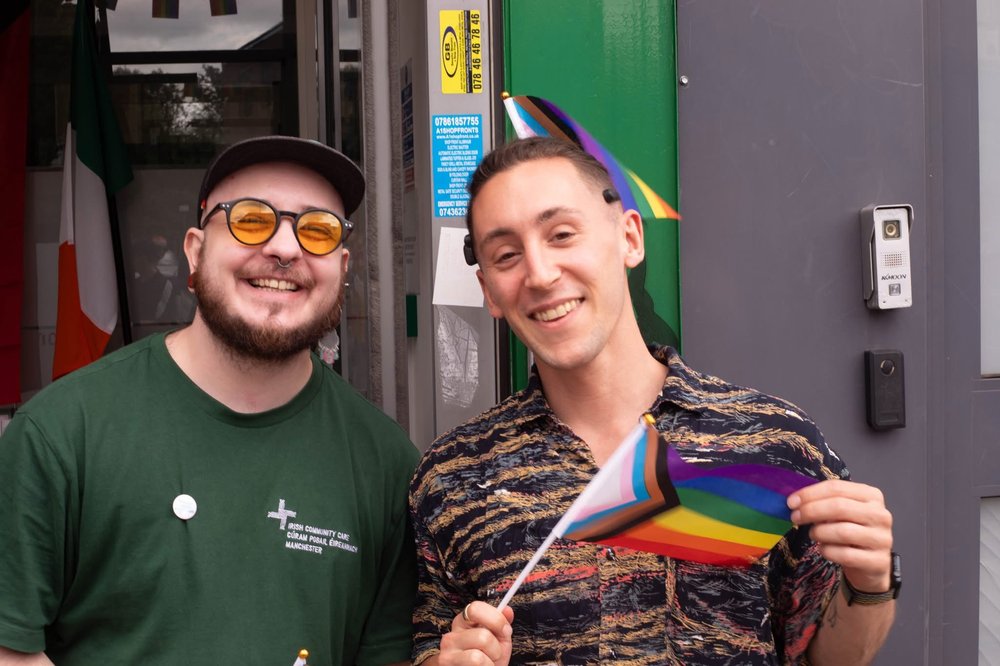
Tell us about your role as an activist?
“I do feel it’s right to stand up for each other and there’s a lot of negative discourse and misinformation about trans and the wider LGBTQ+ community right now, online, in the media etc.
Being a trans person, I’ve always been loud and proud, so my existence attracts activism to me, rather than the other way around.
Being a trans person, I’ve always been loud and proud, so my existence attracts activism to me, rather than the other way around. I think as HUSK, I’m possibly one of a handful of trans artists singing in the Irish language too, so people connect to me through that, which I am so proud of.
Through Irish Community Care Manchester, I have begun to setup Bród Manchain, the first LGBTQIA+ community group specifically aimed at Irish people in Greater Manchester. One of our first meetups was around using the Irish language in an LGBTQIA+ context looking at the challenges that come with it, and how exciting it is to be part of the growth of the language in that way.
Seeing people feel comfortable in themselves and with each other, supporting each other’s journeys through Gaeilge by exploring how to make it work for them was incredible.
It’s not always huge marches or parades that are moments that change history; it’s the moments where what we’re doing is making a difference to the daily life of ordinary people. Using the Irish language in 2025 is one of those things. Adapting the Irish language with an LGBTQIA+ lens is another.”
To get involved with Bród Manchain or for more information on Irish Community Care Manchester, visit their website.
HUSK will be performing at ‘Queer Arrivals’ as part of Liverpool Irish Festival on 17th October at The Unity Theatre with folk artist Grainne Hunt. Find out more at liverpoolirishfestival.com.