


Ireland's work at OSCE
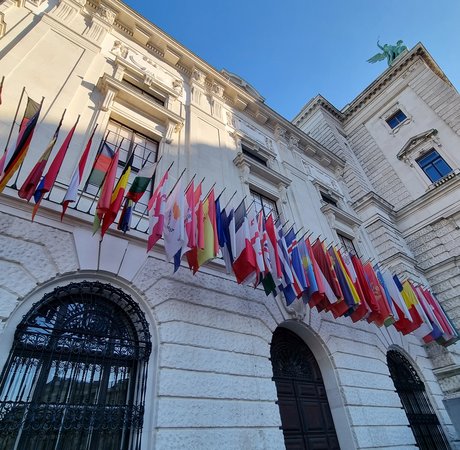
About OSCE
The Organisation for Security and Co-Operation in Europe (OSCE) is the largest regional security organisation in the world.
All 57 participating States, from Europe, Central Asia and North America, meet once a week at the Permanent Council for political consultations on a broad range of security related issues.
The OSCE has developed a comprehensive concept of security encompassing the politico-military, economic and environmental, and human dimensions of security.
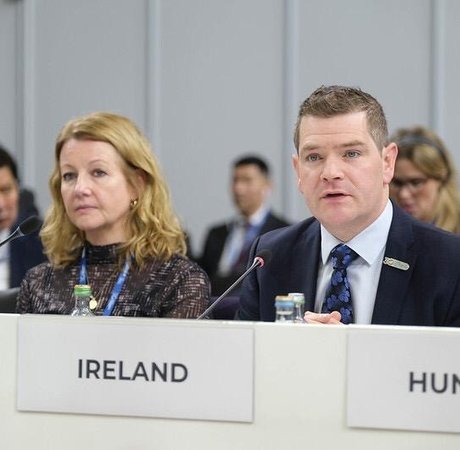
The Ministerial Council
The Ministerial Council is the central decision-making and governing body of the OSCE.
It takes place each year in the participating State holding the Chairpersonship. During the Ministerial Council, Ministers assess the security situation in the OSCE area and review the organisation's work in all its fields of activity.
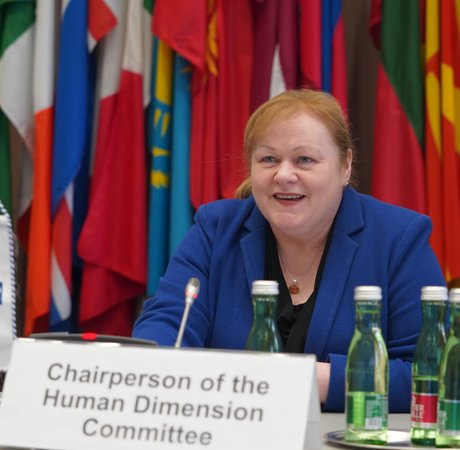
Ireland chairs OSCE Human Dimension Committee 2023-24
All OSCE participating States have agreed that lasting security cannot be achieved without respect for human rights.
From 2023 – 2024, Ireland is chairing the OSCE Human Dimension Committee.
This Committee meets approximately once a month to address issues in the OSCE area relating to human rights, rule of law, elections, democracy, media freedom, national minorities, and tolerance and non-discrimination.
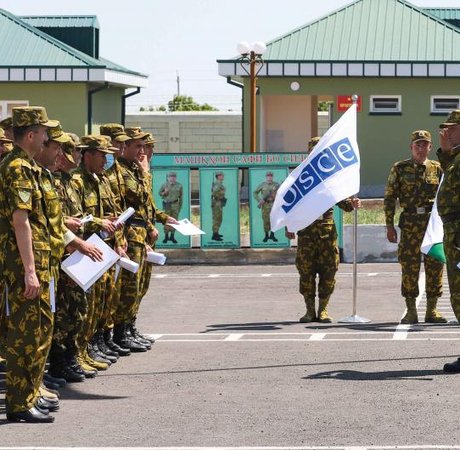
Politico-military dimension
Within the politico-military dimension of the OSCE’s work, the organisation seeks to create greater openness, transparency and co-operation and has developed the world’s most advanced regime of arms control, disarmament and confidence-building measures.
In observing the exchange of military information, participating states are committed to the non-proliferation of weapons of mass destruction, improving control of Small Arms and Light Weapons (SALW), including illicit arms trafficking and dealing with stockpiles of ammunition.
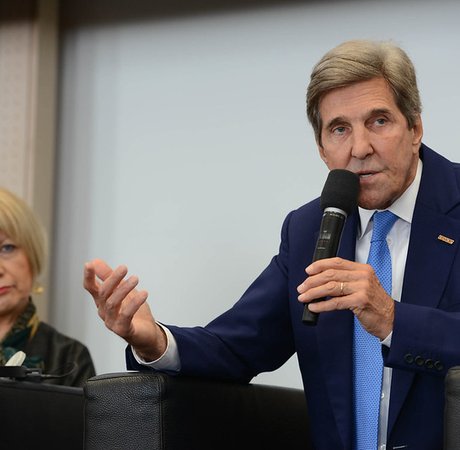
Economic and environmental dimension
The OSCE’s economic and environmental dimension recognises that such factors can pose threats and challenges to security and stability.
Within the economic and environmental dimension, the OSCE supports participating States in promoting good governance and environmental awareness, tackling corruption, sharing natural resources and in the sound management of environmental waste.
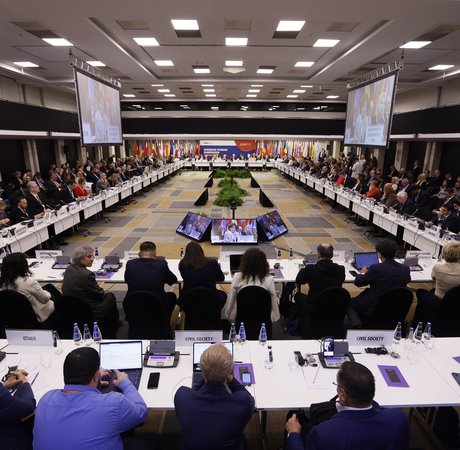
2023 Warsaw Human Dimension Conference
The 2023 Warsaw Human Dimension Conference, a 10-day long human rights conference brought together hundreds of government officials, international experts and civil society representatives to discuss the condition of human rights and fundamental freedoms in the OSCE area.
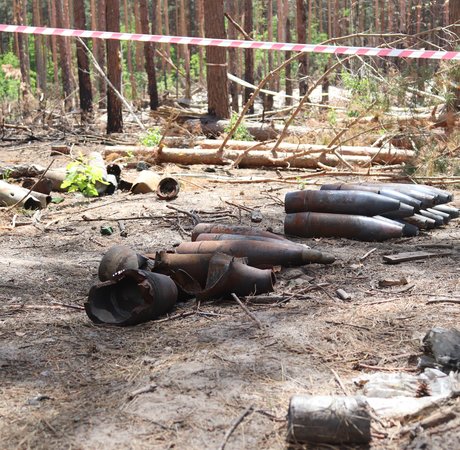
Support Programme for Ukraine
Ireland funds a number of extra-Budgetary projects in the OSCE region, including the Support Programme for Ukraine (SPU).
The SPU was launched in November 2022 to address the immediate challenges to civilians posed by the war against Ukraine, and to support the long-term democratic and social resilience of its institutions and civil society.
The programme is comprised of important projects including humanitarian demining, monitoring of environmental damage from the war and combatting trafficking in human beings to provision of psychological support to conflict-affected people.