


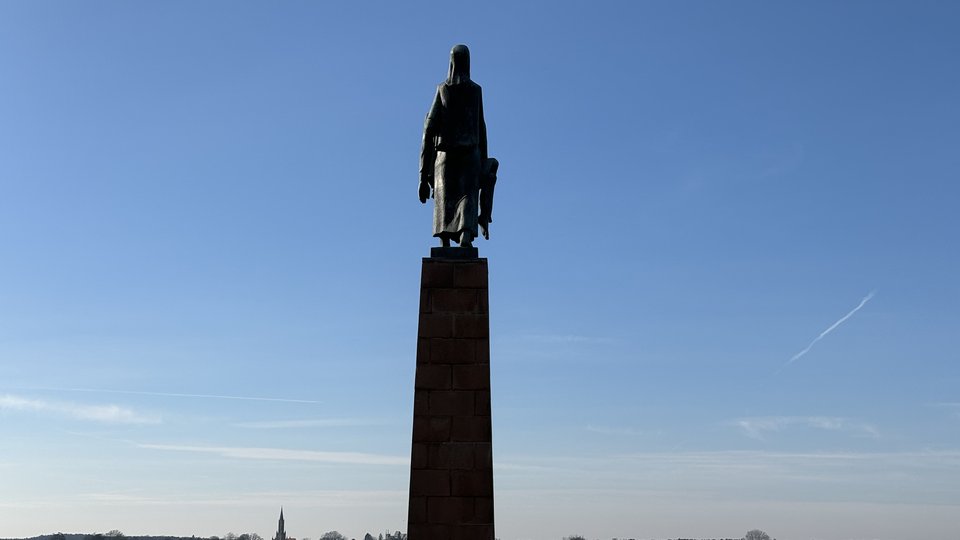
The Irish Women of Ravensbrück
Over recent years, the stories of a number of Irish women who were imprisoned in Ravensbrück have come to light. Ravensbrück was the largest women’s concentration camp in Nazi Germany, built by the SS in 1939.
The first prisoners were interned at Ravensbrück in May 1939. By January 1945, the camp had more than 50,000 prisoners from over 30 countries. Between 1939 and 1945, a total of over 120,000 women and children were imprisoned there. Five among them, that we know of, were Irish.
These brave women were members of various groups in the anti-fascist resistance in France and Belgium during the Second World War, and were arrested and deported to Ravensbrück for their resistance efforts.
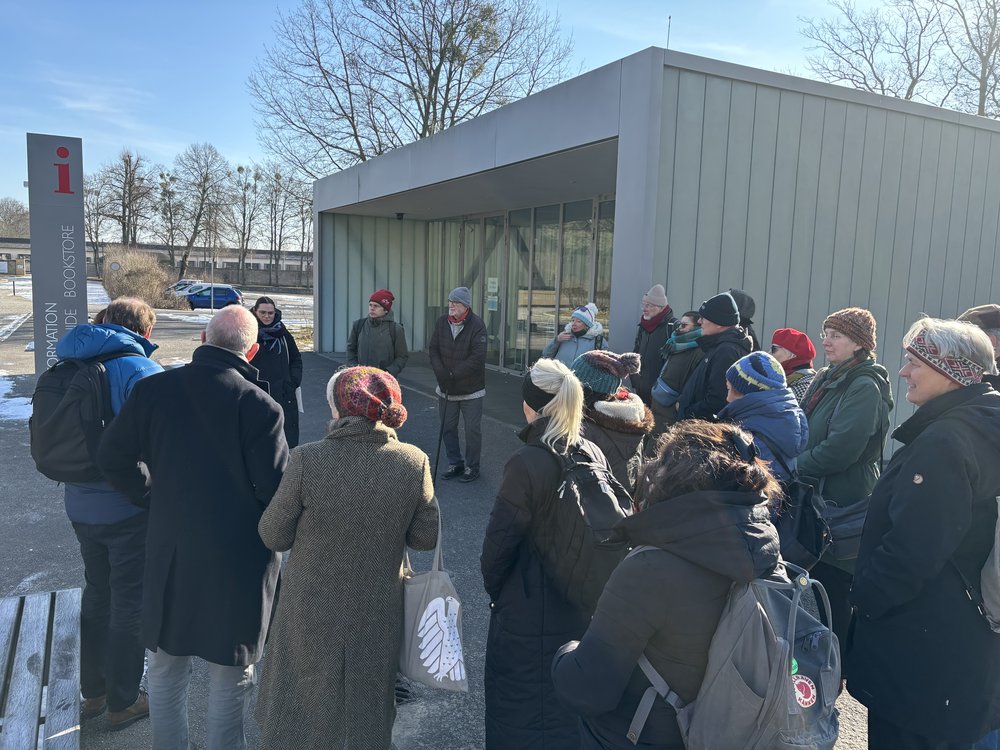
In February 2025, the Embassy of Ireland in Berlin held two events to commemorate these women.
On 19 February, a panel discussion was held in the Embassy. The panel consisted of Dr. Andrea Genest, Director of Ravensbrück Memorial, Catherine Fleming, Biographer of Sr. Kate McCarthy, and author Margo Gorman. The speakers provided an insight into the history of Ravensbrück, and anecdotes of the prisoners’ daily acts of solidarity and resistance, even in the most inhumane environment.
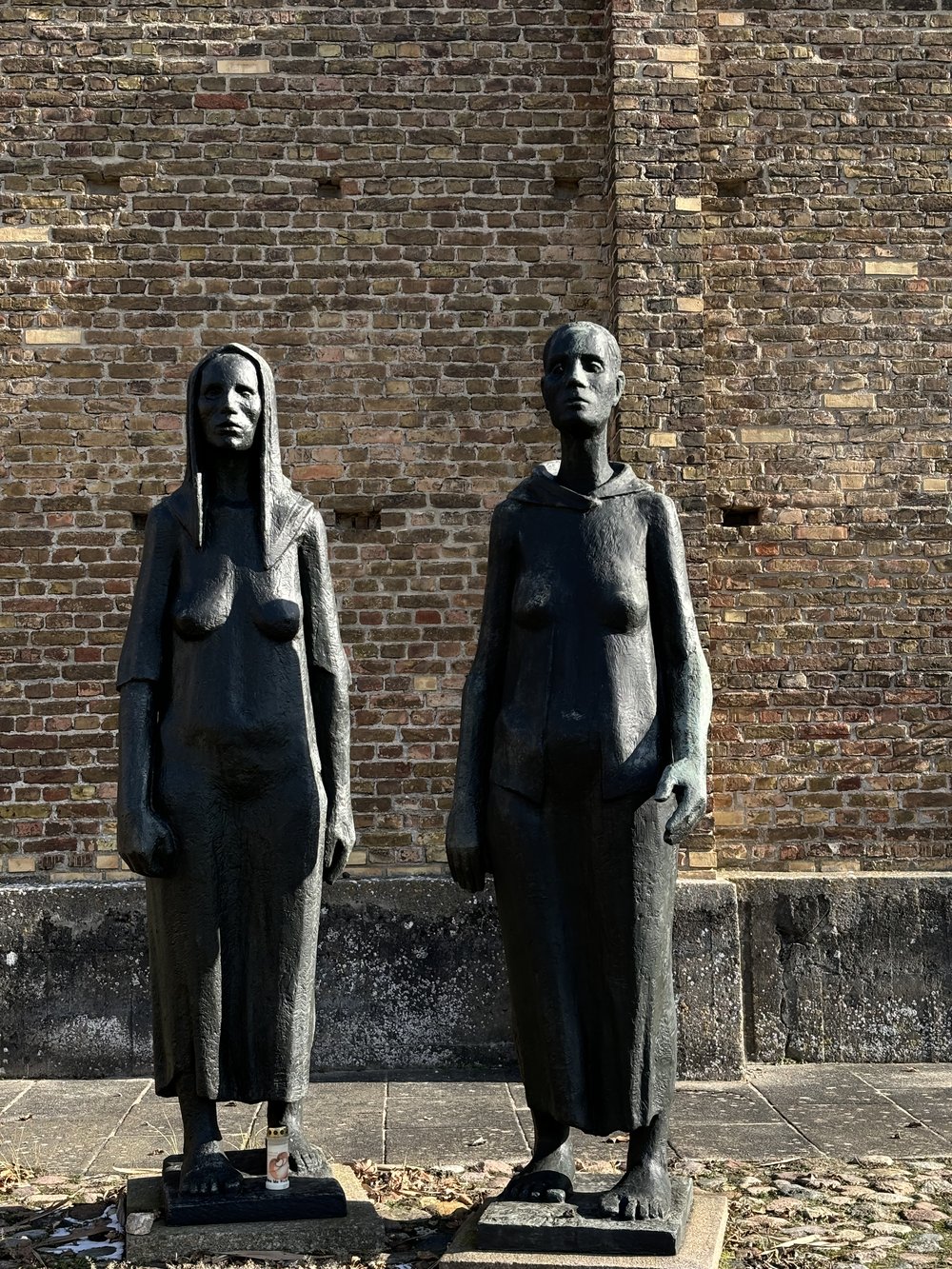
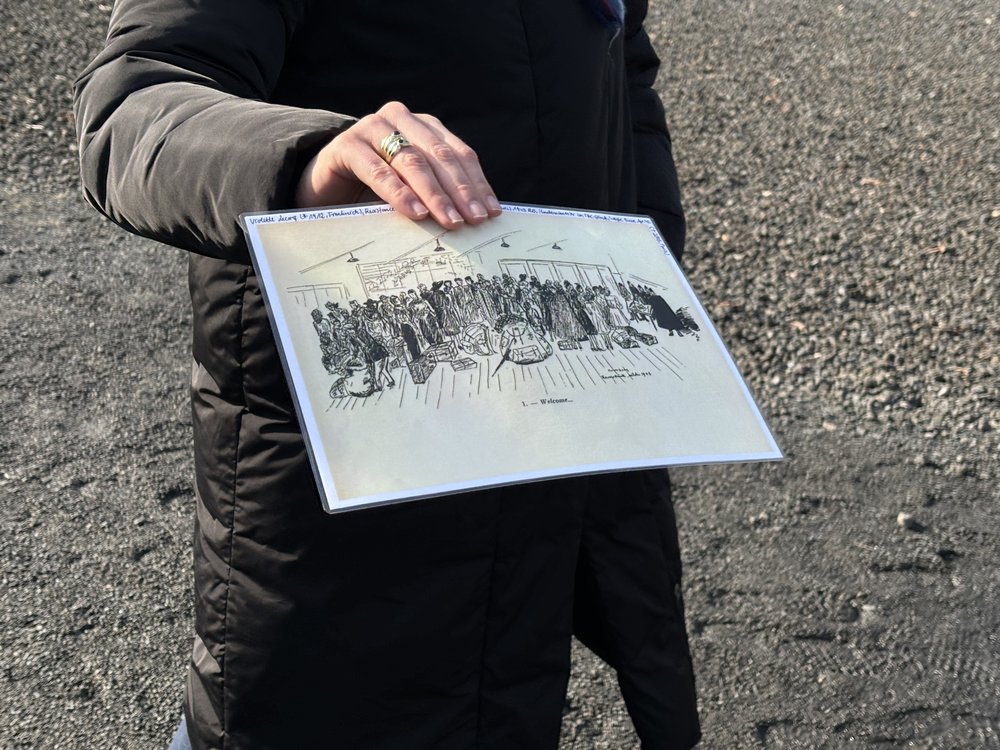
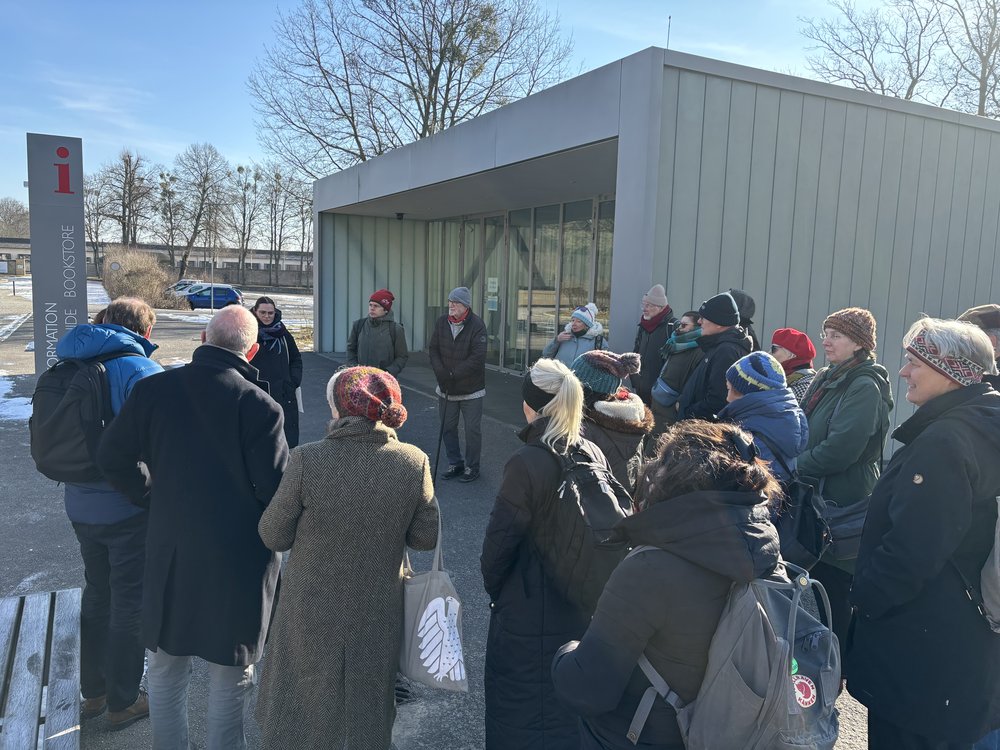
On February 20, the Embassy coordinated a group visit to and guided tour of the Ravensbrück Memorial, which enabled participants to build upon what they had learned about Ravensbrück at the Embassy event. The photos in this article were all taken on site at the Ravensbrück Memorial during this visit.
Here is an insight into what we know of the Irish women who were imprisoned in Ravensbrück:
Sister Katherine (Kate) McCarthy
Sr Kate was born in Drimoleague, Co. Cork in 1895 and joined the Franciscan Order in Cork aged 18. She was transferred to Béthune in France and nursed wounded soldiers during WWI.
During WWII, Sr. Kate reportedly helped up to 200 Allied servicemen escape from occupied France. Her work was discovered and she was arrested by the Gestapo in June 1941. After a year in solitary confinement, Sr Kate was held in a number of concentration camps and prisons, ultimately ending up in Ravensbrück.
She was released from Ravensbrück upon its liberation in 1945, and was brought to Sweden by the Swedish Red Cross. Later, her work was honoured by the French, with the Médaille de la Résistance, which was personally presented to her by Charles de Gaulle. She was also recognised by the British, receiving a citation from Sir Winston Churchill, and the Chief of Staff of the Royal Air Force.
Sr Kate returned to Cork and became Mother Superior at the Honan Convent. She died in 1971, and is buried in St Finbarr’s Cemetery, Cork.
Irish author Catherine Fleming has written a biography of Sr Kate McCarthy, and gave this interview to Myles Dungan’s The History Show. An overview of Sr Kate’s life and work published by the Skibbereen and District Historical Society can be found here.
Catherine Crean
Born in Dublin in 1879, Catherine Crean moved to Brussels around 1910. She joined the Belgian Resistance as a member of the ‘Luc Network’, helping Allied airmen after they had been shot down in Brussels.
As part of this work, she travelled between safe houses in the city, delivering food and clothes to the Allied servicemen. She also gave English lessons to members of the resistance network.
Catherine was betrayed, arrested, and ultimately sent to Ravensbrück in 1943. She is reported to have died of dysentery in the camp in 1945, shortly before the camp was liberated.
Mary Cummins – later Countess Mary de Galway O'Kelly
Mary Cummins was born in Dublin in 1905. She moved to Belgium, where she worked as an English teacher and a translator in the Canadian Embassy in Brussels, before becoming a member of the Belgian resistance. The network she was part of transmitted information on troop movements to French and British forces. Mary herself worked as a translator and a weapons courier.
Mary was arrested by the Gestapo in Brussels in 1941, and was transferred between numerous prisons and camps in Germany, including Ravensbrück, whilst Irish diplomats tried to broker her release.
Then Irish Ambassador to Germany Cornelius (Con) Cremin is reported to have visited Mary in Cottbus Prison in 1944. Cremin made representations to the German Federal Foreign Office, initially securing an increased clothing allowance for Mary, and later her release. Mary was released from prison in January 1945 and reportedly went to stay with Ambassador Cremin and his family for some time.
In 1946, she was decorated by Belgian King Leopold and US General Eisenhower. In 1949, she married Count Guy O’Kelly de Galway and they moved to Ireland.
Mary Cummins died in June 1999, and was cremated at Glasnevin Cemetery, Dublin.
RTÉ’s Doc on One broadcast an interview with Mary Cummins in 1993, which is available to listen to here. Her obituary, as published in The Irish Times, is here.
Agnes Margaret Flanagan
Born in Birr, Co. Offaly in 1909, Agnes Margaret Flanagan moved to Belgium aged 21.
Agnes was arrested on a charge of hiding a British prisoner of war, and later on a charge of possessing resistance documents. She was deported from Belgium to stand trial in Essen (Germany) and was sent to Ravensbrück Concentration Camp in 1942.
In 1945, she, like Sr Kate McCarthy, was rescued from the camp by the Swedish Red Cross and brought to Sweden.
Agnes returned to the town of Tournai in Belgium, where she at lived before the war, and later married. She remained in Tournai until her death in August 1986.
History Ireland compiled what is known of Agnes’ story in this article.
Mary O’Shaughnessy
Mary O’Shaughnessy was born to Irish parents in Ashton-in-Makerfield, England, in 1898. As a young woman, she moved to France, where she first worked as a governess.
With the onset of WWII, Mary became involved in helping Allied servicemen escape occupied France, particularly airmen who were shot down whilst flying over France. Her resistance activities brought her to the attention of the Gestapo and, after being betrayed, Mary was arrested in Lyon in March 1944. She was deported and imprisoned in Ravensbrück until the camp’s liberation in 1945.
Mary returned to England and later gave evidence at the war crime trials against 16 Ravensbrück personnel in Hamburg in December 1946. She died in the UK in 1973.