


Halloween: Uncovering Irish-German Vampire Links
On 31 October every year, people from Ireland, Germany and around the world celebrate Halloween.
But did you know that Halloween has its origins in the 2,000 year old Irish festival of Samhain?
Irish origins
The Celts celebrated Samhain to mark the end of the harvest season and the beginning of winter. They believed that at this time of year, the line between the worlds of the living and the dead were at their thinnest and that the demons and spirits could break through.
To avoid being recognised by the spirits and taken into the underworld, people dressed up as ghosts, which is believed to have inspired the idea of fancy dress today. They also carved faces into turnips and other vegetables and lit them up with candles to ward off spirts. Today carved pumpkins are synonymous with this time of year.
After Christianity came to Ireland, Samhain became All Hallows Eve, today known as Halloween.
When Irish migrants travelled to the United States they brought these traditions with them and, over time, Halloween has become a major global event.
Halloween in Germany
Halloween is increasingly popular in Germany. Each year, you will see children (and adults) dressed as witches, wizards and demons going from door to door asking for ‘Süßes oder Saures’ or ‘Trick or Treats’.
You might notice that some of those people in fancy dress are dressed as vampires but did you know that vampires possess a distinct Irish-German link?
Spooky synergies
Bram Stoker, the Irish author, wrote Dracula in 1897. It tells the story of a vampire, an undead creature, who survives by eating the blood of humans. Since its publication, it has inspired generations of stories about these mysterious beings that have now become mainstream.
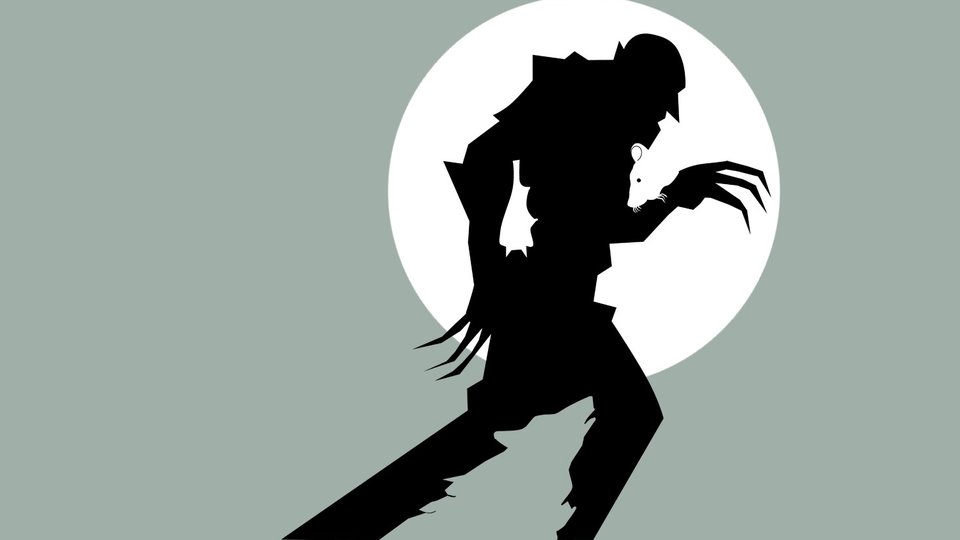
One particular individual inspired by the story was the German filmmaker, F.W. Murnau, who in 1922 released Nosferatu, an expressionist silent film that became canonical in the history of cinema. Nosferatu brought the story of the vampire to the silver screen for the first time, wowing and terrifying audiences.
The film was clearly based on Stoker’s novel and the tensions that arose between the Stoker estate and the film team were extremely dramatic, due to the non-approval of the adaptation, with a court-ruling that all copies of the film were to be burned. However, what we have left from this incredible cultural exchange is an allegory of how, once a good idea is released, it cannot be contained. This is evident by the countless adaptations of this iconic film, including one by filmmaker Robert Eggars in 2024.
Ghoulish gathering
The Embassy of Ireland in Germany celebrated this unique connection through the German-Irish Vampire Festival in 2022 on the 125th anniversary of the publication of Dracula and the 100th anniversary of the release of Nosferatu.
As part of the festival, the Embassy commissioned a new musical accompaniment for Nosferatu, in the form of a collaborative electronic music score from Cork composers Linda and Irene Buckley, with legendary Berlin electronic artist Gudrun Gut. The premiere of this work was the final event of the festival, which took place in Berlin’s Zwinglikirche, under a rare blood moon on Bram Stoker’s birthday, 8th November.
Watch a sample from this chilling collaboration below:
In addition to this, the broader the Embassy programme brought together a number of different activities which included an exhibition called ‘DÉAD (a set of teeth)’ at transmediale studios, Silent Green. This exhibition was the result of a German-Irish university collaboration, brought about by the Embassy’s ‘Creative Pathways’ programme, in partnership with Goethe-Institut, Irland. These collaborations, creating new works inspired by the Vampire, ensure the endurance of this very special (and spooky) cultural connection.
Learn more about Halloween's Irish Origins