


The Wreck of the Providentz: An Irish ship rediscovered in Norwegian waters
In November 1721, off the south coast of Norway, a goods ship from Cork ran aground and sank. It was bound for Arendal, Norway, with a cargo of butter, corn, grain, and malt when it stopped near Mandal on October 16 to wait for better weather. The ship, named the Providentz, sunk and disappeared without trace for centuries. That was, until the surprise discovery of the wreck in late 2020.
Discovery of the Providentz
The discovery of the Providentz was made by local Norwegian divers, members of the Mandal Dykkerklubb. The club had been searching for the wreck site for years to no avail, until they tried searching in another direction.
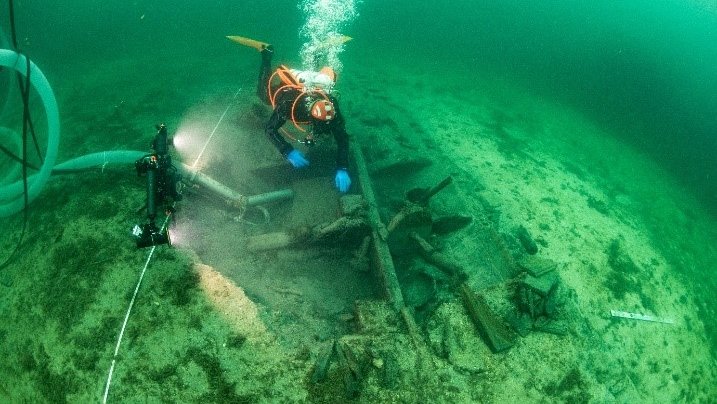
Due to a fortuitous shift in the sands on the sea floor, part of the wreck was exposed and 300 years after the Providentz first went down, it was located again. The discovery made local and national waves in Norway, and even received coverage internationally.
Investigation of the wreckage
Shortly after, a full investigation of the wreck site by marine archaeologists from the Norwegian Maritime Museum was organised, including Irishwoman Sarah Fawsitt. As video from Mandal Diving Club had shown, there were a great many objects that had survived the past 300 years, in part because they were buried under the sand.
What has been revealed?
Some background of the ship’s fate was known prior to the discovery of the wreck. This is because after the ship sunk, a court case in Mandal in 1721 sought to understand who was at fault.
Unsurprisingly, the crew of the Providentz laid the blame squarely at the feet of the local pilot who was engaged to bring them into harbour. Meanwhile, the pilot insisted that the crew were in no fit state to guide the ship safely. The exact truth of what happened may never be known, or why a ship of this kind should sink on what was supposedly a calm evening.
What we do know is that the ship itself was typical of the merchant ships leaving Cork for the wider world at this time. The ship was owned by the Lavit family, who are remembered today in the name of Lavitt’s Quay in Cork.
Dendrochronology, dating and diving
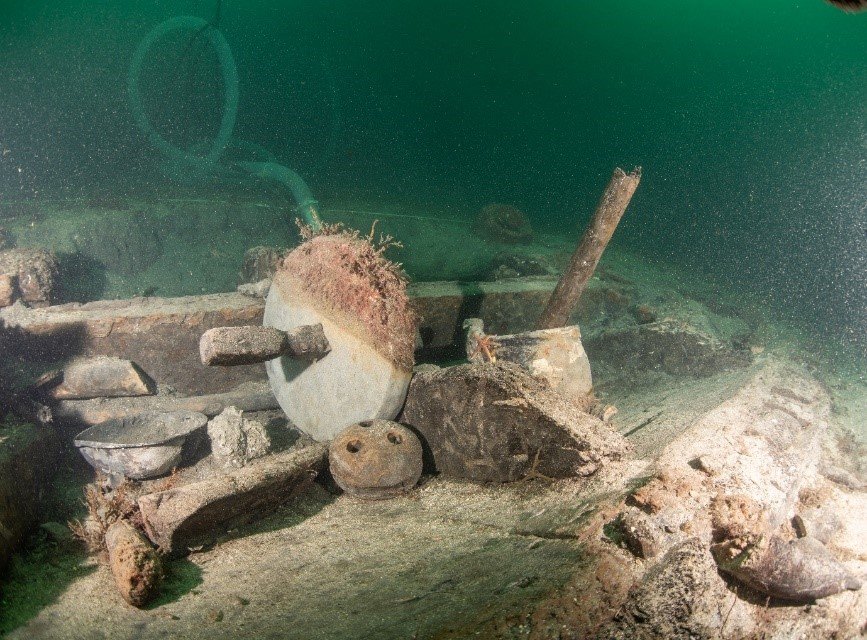
The grind stone in the image above is a clear example, where it’s upper area had been exposed on the seafloor whereas its lower portion and all of the other objects nearby, along with most of the body of the ship, had been safely buried beneath the sand.
Since the initial discovery of the wreck, a number of dives have taken place at the site. On the most recent occasion, the Ambassador to Ireland in Norway was present in Mandal along with the archaeologists from the Norwegian Maritime Museum to learn more about the ship, its cargo and how it would be brought back to land for safekeeping at the Norwegian Maritime Museum.
The confirmation that the wreck is the Providentz was provided through the method of dendrochronology. This is the process of counting the age of the wood used to build it by counting the tree rings. The dating of the wood suggests that the ship itself was only two years old when it sank.
Irish marine archaeologist, Sarah Fawsitt, one of the team members behind the Providentz wreck research at Norwegian Maritime Museum, spoke to us to tell us more about this process and her journey from the west coast of Ireland to the southern tip of Norway.
Hear from Sarah Fawsitt below
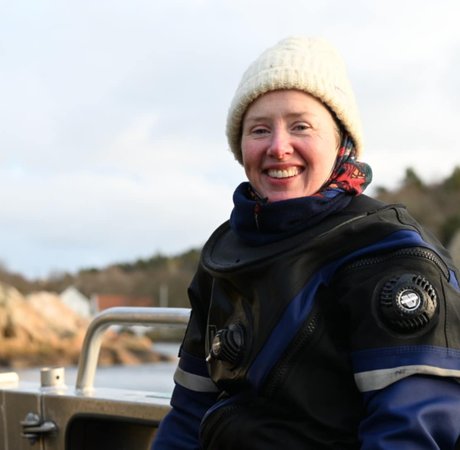
Sarah Fawsitt came into her role as a marine archaeologist at the Norwegian Maritime Museum thanks to some chance encounters during her studies. While studying for her BA in Irish Heritage, Sarah took a year out to work on an excavation with an underwater archaeologist. This planted the seed with Fawsitt and when she resumed her studies, she joined the GMIT/NUI Galway dive club where her love for the underwater world grew.
While working at the National Library of Ireland for a number of years, she kept up her interest in diving. Later, she did a part time maritime archaeology course with the University of Ulster, before securing a student placement with the Underwater Archaeology Unit.
She then took the plunge and moved to Denmark to do a master’s degree in Maritime Archaeology. During her final semester, she got word that the Norwegian Maritime Museum was looking for help with a huge excavation of 16th century ships that had just been found. She’s been there ever since.
Fawsitt appreciates that finding shipwrecks with artefacts on board is relatively rare. “This is for a number of reasons, the greatest being the environment which might be conducive to the total eradication of a shipwreck,” she explains.
“There are many human factors too such as dredging, dragnet fishing, salvaging, and sadly plundering. The idea of sunken treasure is a tantalising one and it is tempting for divers to take a memento from their dive. But the real value in most shipwrecks is that they can tell an untold or forgotten story about the society they have come from. This can only happen if the artefacts are left in their original context or are adequately recorded before they are removed.”
Preserving artefacts from a shipwreck, like those from the Providentz, comes with unique challenges, which is all too familiar for Fawsitt. “Some items are relatively stable such as the ceramics and clay pipes. Organic objects require intervention and a longer period of treatment to be stabilised such as wooden objects like rigging blocks,” she says.
“Some items require an in-depth knowledge of the material and its chemical makeup paired with a delicate cleaning process, and at times reassembly such as glass bottles, and the iron cauldron. The iron cauldron had entirely corroded so that all that was left of it was graphite. It is hard to say how long these objects would have survived on the sea floor, but as soon as they were taken out of the water, their rate of decomposition skyrocketed exponentially. So the clock was really ticking for some of the items. This is why we ask recreational divers to never remove artefacts from the sea floor. The best thing they can do is to take a position and send a message to the relevant authority responsible for underwater heritage.”
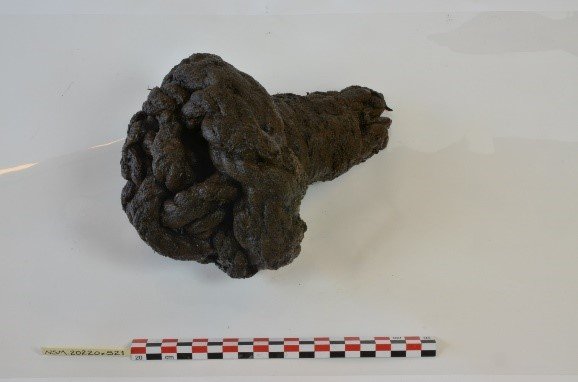
A beautifully preserved knot known as a ‘monkey fist’ that was used as a weight at the end of a rope to help when throwing it a longer distance.
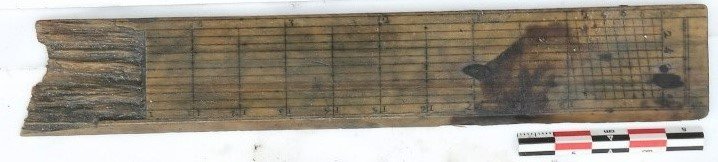
One of the most incredible finds was this 18th century slide rule that was used for navigation.
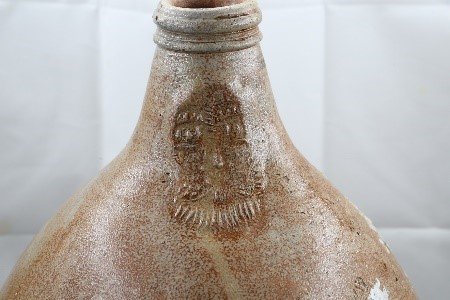
This stoneware jug is known as a Bartmann jug or a Bellamarine jug because of the bearded man depected on the neck of the jug.
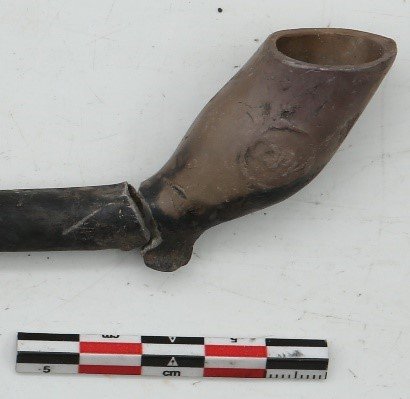
The letters were somewhat worn away but when the archaeologists saw that two of the clay pipes they found had the word ‘Cork’ on the side, they knew they were on the Providentz shipwreck.
Sarah never expected to be working on an Irish shipwreck in her new home of Norway. She says it has been amazing working on this project: “It really opened my eyes to a period in Irish history that I had missed. This shipwreck has shown the connections that Ireland had to the wider world. Which of course it had, but it’s sometimes forgotten,” she concludes.