


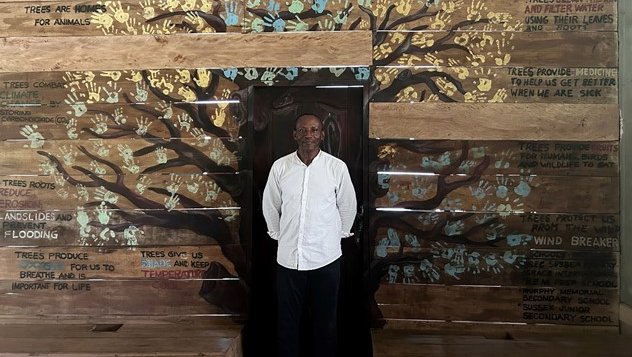
Seeds of change: Tommy Garnett’s biodiversity campaign and UNESCO World Heritage success
Dual Irish and Sierra Leonean citizen Tommy Garnett, caught the world’s attention when his efforts to get Sierra Leones Tiwai Island Sanctuary onto the UNESCO list of World Heritage Sites was successful on Sunday, 13 July 2025.
Garnett and his team at the Tiwai Island Sanctuary lodged the formal application in January 2024, however the foundation for this laudable achievement began decades earlier when he established the Environmental Foundation for Africa in 1992, initially funded through the RTÉ Third World Fund.
Garnett was living in the UK with his Irish wife in the early 1990s when media coverage of hardship from the civil war in his home country, Sierra Leone, caught his attention.
He was surprised that despite being the background for this media coverage, the environmental devastation was never mentioned as a consequence of the war and extractive industries.
Eager to improve the degraded land, Garnett, who has a Masters in Agricultural and Development Economics from Tashkent Institute of Agriculture in Uzbekistan, began the work to found the Environmental Foundation for Africa (EFA).
“By 1995, I had managed to set up an operation in Freetown. I recall that the very first grant I received was £5,000 Irish punts from the RTE Third World Fund, to come and start whatever exploration or experimentation we wanted to do on land restoration… We were able to work with three communities in Kambia district, and reclaim 20 hectares of land that had been destroyed by mining, and we replanted it with rice. I was asked to make an application for longer term funding,” says Garnett.
We were able to work with three communities in Kambia district, and reclaim 20 hectares of land that had been destroyed by mining, and we replanted it with rice.
EFA quickly became a regional body when Garnett had to relocate to Liberia along with many other Sierra Leoneans in 1997 as a result of renewed conflict in Sierra Leone.
He started a project working with refugees and internally displaced people to plant thousands of trees, creating a plush green landscape. Through the project, he demonstrated how working with nature can have significant benefits for individuals and communities by providing food, shelter and importantly, shade during the long and hot dry season.
It wasn’t long before Garnett’s work caught the attention of the United Nations High Commissioner for Refugees (UNHCR), who visited him in Liberia. When they met, Garnett asked what the UNHCR was doing about the environmental impact of more than a half a million refugees in the region. There was no clear answer, so he was invited to their office to come up with a plan.
“From that we started to oversee environmental interventions in all the refugee camps in Liberia plus the returnee affected areas. We went from just a bare bones hustle to our very first €100,000 project, plus a car and equipment provided by UNHCR. Within a year, we went from half a dozen personnel to 20 or 30… We set up a programme in Sierra Leone which became very effective… and in that process is when we discovered Tiwai,” he explains.
We went from just a bare bones hustle to our very first €100,000 project, plus a car and equipment provided by UNHCR. Within a year, we went from half a dozen personnel to 20 or 30.
Tiwai Island
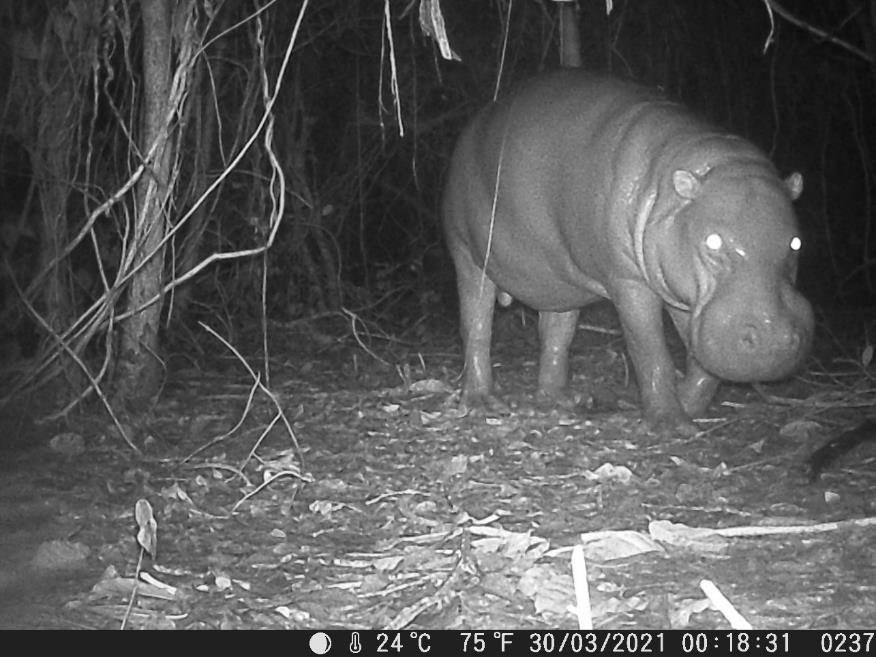
Tiwai island is home to a population of the critically endangered ‘pygmy hippopotami’; hundreds of bird species; and it is also home to one of the most diverse concentrations of primate populations in the world with 11 different species coexisting on the island.
A sanctuary on Tiwai had been established in the mid-1980s. At the time it operated as a field research station where people were invited to visit to fund communities who were giving up their land. When the coup d’état began, it became unsafe for researchers and visitors, and the abandoned structures fell into disrepair.
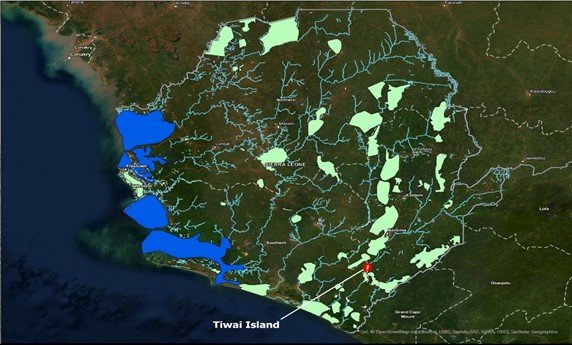
Following his time in Liberia, Tommy again returned to Sierra Leone to continue his work with displaced people building their environmental knowledge and skills. At this time, he discovered that monkeys on Tiwai Island were being housed to sell at the Liberian border by refugees.
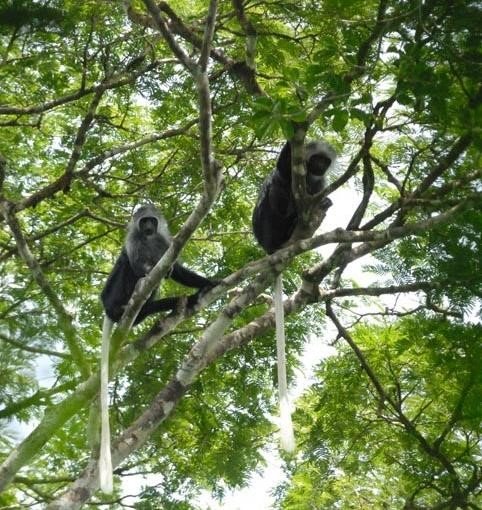
“People do not want their monkeys killed, they don’t want their protected areas destroyed, poor Liberians and Sierra Leoneans both were being taken advantage of,” he explained.
The first port of call for their team on Tiwai was to stop this activity by creating awareness and offering alternative income sources.
Community roots
The focus for the EFA was conserving the biodiversity of the area. They understood, however, that the key to this work was the cooperation of local communities.
Using wage transparency model, Garnett hired people from the community and only sought external labour for specialist or undesirable work.
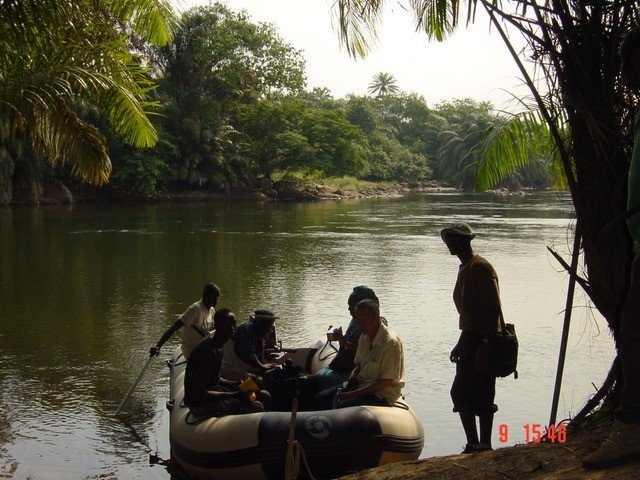
“We felt that we needed to figure out ways that they could be involved in activities that both protected the environment, and put money in their pockets,” says Garnett.
He invited external partners to bring business to the area and to supplement any money the organisation itself couldn’t provide. Tiwai Island is now operating as a wildlife sanctuary and a community-led tourism site again.
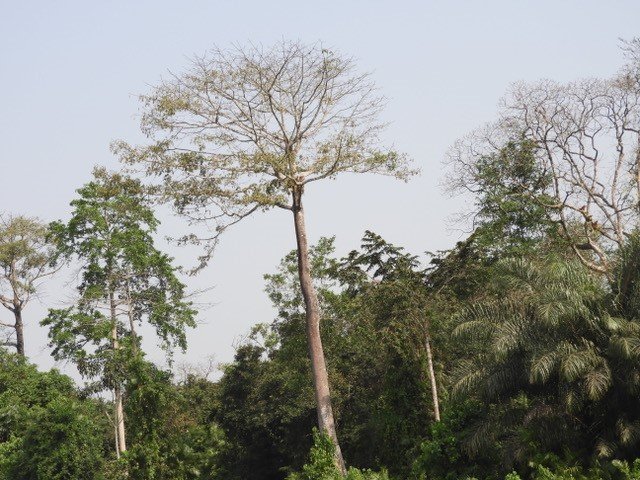
As the population started to grow, Garnett saw an opportunity to ingrain an awareness and interest in environmental issues in new generations.
Difficulties faced
Beyond the destruction from years of conflict, the EFA faced multiple challenges. In the early years, it was particularly difficult to secure funding for more than six months at a time. He sought small amounts of funding from various organisations before becoming a member of the International Union for Conservation of Nature (IUCN).
Land restoration and environmental work was also not a common priority at the time.
“I can count on one hand how many organisations were involved in Environment,” he says.
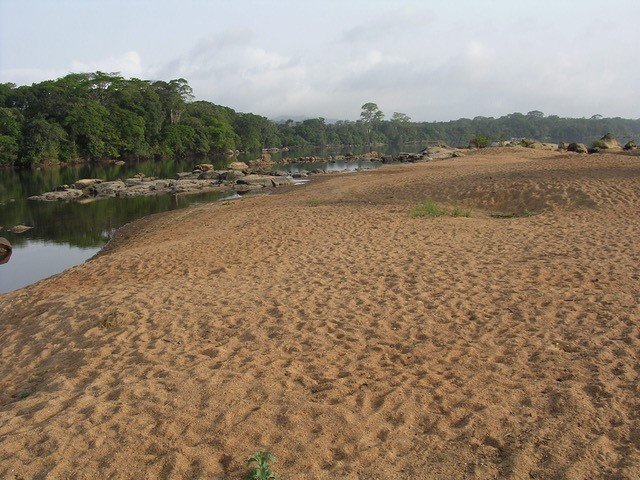
Extractive industries like mining and logging are causing significant problems for Garnett and his team.
“I think they are inciting some pushback from the communities, but we have done so much outreach and engagement that everyone knows the benefits and value both for them and for the country.”
Learning from the land
My vision of success would be when every youngster has planted at least one tree.
Education and engaging young minds has always been something at the heart of Garnett’s work. He had been asked to present his work to transition year classes when returning to Ireland to see his wife and children. As a dual citizen, it was only natural to educate children in both countries.
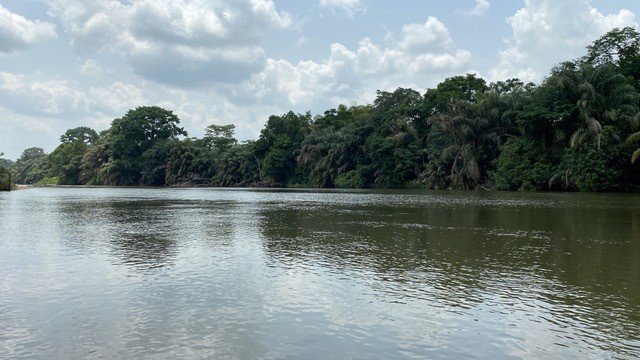
The establishment of a Learning Centre in Freetown, the capital of Sierra Leonebecame a central focus of their work, and helped to improve awareness about the incredible diversity of life that lives and, when supported, flourishes in Sierra Leone’s diverse rainforests.
Now, more than 65,000 children have engaged in environmental education with the EFA. He speaks on their insights on the environment and biodiversity with pride and great hope for the future.
“They [children] are the ones with the energy and can be motivated. We have to reach into their hearts in order to make them understand the value of things.”
Looking to the future
Garnett and his team spent three years putting together an application tohave Tiwai Island recognised as a UNESCO World Heritage site. Just over a year and a half after that application was submitted, the Gola-Tiwai Complex was inscripted on the list on 13 July 2025.
It is the first ever UNESCO World Heritage site in Sierra Leone, which is something Garnett hopes will attract more visitors and engagement, and inspire people to replicate it. As the country’s inaugural site on this global list, it marks a powerful recognition of Sierra Leone’s rich biodiversity and the work of the EFA, helping to put its natural wonders on the international stage.
“The process of getting this application in place has helped us to learn many things, and helped us to get many mechanisms in place that will help us going forward, and will help us place the communities at front and centre, both of the benefit but also of the ownership and accountability for the place… Everybody understands about World Heritage, everyone knows what it means for Sierra Leone, and in a global sense, it means that Sierra Leone and Tiwai will be one of the storehouses of biodiversity in the world.”
What began as a desire to restore the land he grew up on for his own children, has quickly progressed to an institution with all children at its heart.
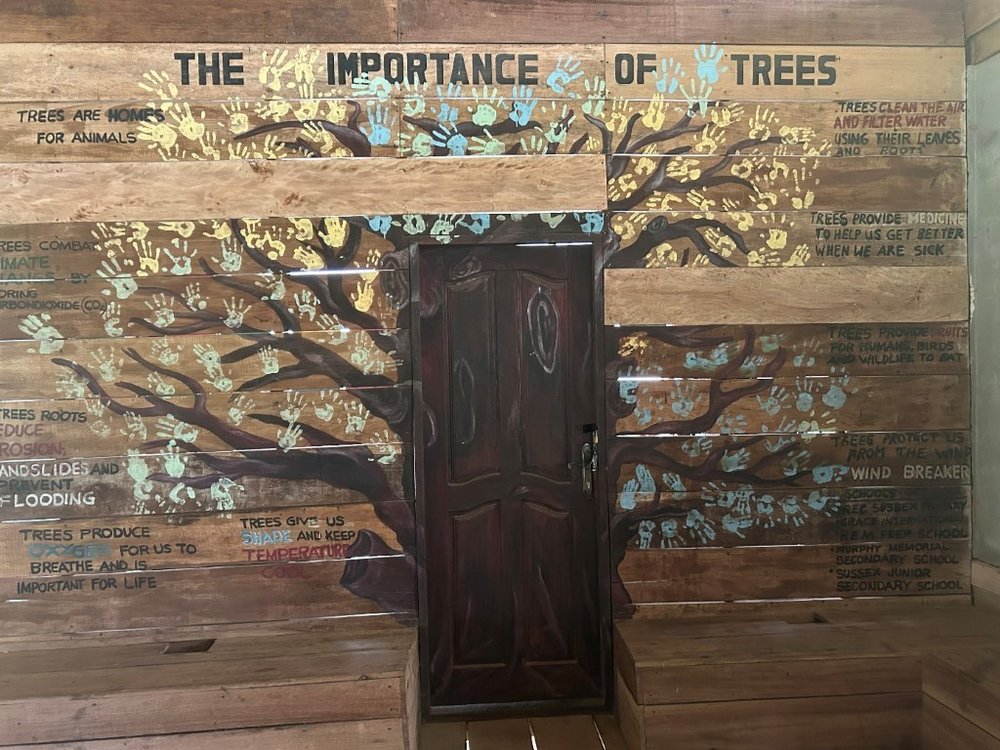
“Ultimately, the answer is written on the steps here: ‘We all take care of that which we love, and we can only love that which we know.”
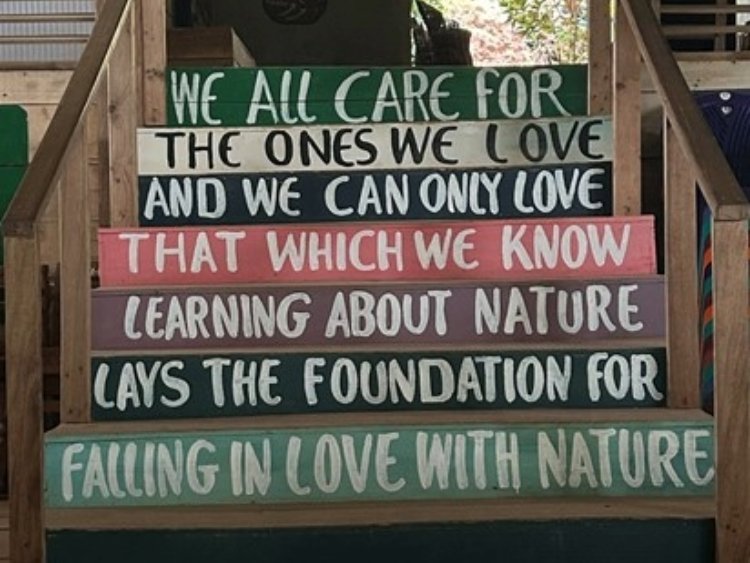
“It is only when people fall in love with nature that they will protect it without being asked to do so. This is what we need to do for kids. They have a clear mind, and an honest approach to things,” says Garnett.
Every young mind nurtured helps Garnett’s legacy bloom with a growing vision of a greener country, and a better environment for generations to come.
EFA is supported by the embassy of Ireland in Sierra Leone, and has received a number of grants to support their work with schools and communities on the outskirts of Tiwai Island.